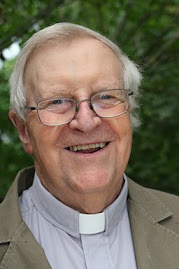
Delivered at St. George’s Chapel, Indian River Hundred, Delaware
November 29, 2009
Advent has always been one of my favorite seasons. The readings contain some of the more majestic passages of the scriptures, the music, the poetry and the theology are impressive. But as I thought about it, I was struck by the many contrasts of Advent.
Contrasts of Advent
There is the contrast that in the world around us, Christmas is already under way while the church keeps a season of penitence and preparation for the joy of Christmas (which begins in about three and a half weeks!) The readings for Advent, too, abound in contrasts. The theme of the fulfilling of a long-held hope is heard in the prophecies of the coming Messiah. But there is also a note of the Judgment to come – a kind of Second Advent, directing our attention to the way we live our lives day by day, because judgment is seen more as a process than a future apocalyptic happening.
Established yet Uncertain
But perhaps the biggest contrast of all, and the one I want us to reflect on for a while this morning, is between settled traditions of the past and the uncertainties of the future. Advent is part of an established round of liturgical worship; it represents a settled, familiar round of worship. Advent looks in two directions. It gathers up all the longings of the People of Israel for the coming of their Messiah, and in that, it is a preparation for our celebration of the coming of the Messiah child in Bethlehem. It also looks to the future, to the completing of God’s rule, and in this way, the message of Advent points up the temporary nature of social conventions and institutions that look as though they are set for ever in stone.
Without doubt, the Gospel & Epistle for today (Luke 21.25ff; I Thess. 3.9ff) direct out attention to the future aspect of Advent, and Jeremiah speaks to sixth century Hebrews of a future hope. The Old Testament sees history as a finite process, a flow of events and people, which has a beginning in the creative act of God, and moves to an End., "I am the Alpha and Omega, says the Lord God, who was and who is to come, the sovereign Lord of all." is how the book of Revelation puts it. (Apoc. 1.8)
Many pictures of the end suggest great trials, but they also assure the Christian community that if it is faithful all will, in the end be well. Paul, writing to the Christians in Thessalonika expects the end very soon, but he writes in a tone of confidence and counsels the community to “increase and abound in love for one another and for all”. The same contrast of trial and trust is clear in the gospel passage from Luke. “People will faint from fear and foreboding”, but to the faithful community he says, “stand up, and raise your heads because your redemption is drawing near.
What we really think about the Eschaton?
Yet another contrast is between our theological positions which take for granted this future aspect of Advent, and our real feelings on the matter. It is one thing to long for the end and the establishment of God’s rule, it is quite another to live one’s life with the conviction that all our cherished institutions are transitory and passing away. After all, if we have a carefully worked out scheme of things, an organized religion, a clear code of law which tells you what to do and what not to do, do we really want a new heaven and a new earth putting in place a totally God-centered rule? Perhaps it is better to have a God at a very safe distance. Later Judaism would not allow Yahweh, the name of God to be spoken, replacing it with surrogates like, “The Holy One” or “the Heavens”. In the Christian tradition we are not afraid to say “Yahweh”, but it may be that our theological structures have made God into a safe abstraction, carefully enclosed in the Nicene Creed.
So, perhaps it is safer to stay with the order one knows; perhaps we are content to enjoy the poetry and music, and to treat this season of Advent as the preparation for the certainty of the Christmas message with its overtones of general good will and family reunions.
Christ in us & we in Him
This would be fine except for the fact that it really isn't like that. As we are reminded again and again, much more than half the world cannot look forward to the joys of family reunions, warm fires and piles of presents. It is precisely the function of the Advent message keep us focused on the here and now while directing us to meditate on the completion of God’s plan. That is what Paul does when he urges the Thessalonians to continue and increase in love as they wait for the end. The paradox is that the One who is to come, already stands in our midst; stands, but also lies bleeding from snipers bullets in too many places in the world, lies emaciated with starvation in many parts of Africa, and is rejected by many in our own culture.
Jesus tells us that we are to see him in each of his children. That, if you recall, is the central idea of the parable of the sheep and the goats. The parable tells of the time “when the Son of Man comes in his glory”, sits in judgement and separates the sheep and the goats. Jesus says to them "Anything you did (or did not do)for one of my brothers or sisters here, however humble, you did (or did not do) for me." (Mt. 25). This is to say, that Jesus meets us in a myriad of unexpected ways. It is to say that we cannot have the kind of solid, unchangeable certainties that a fixed religious system may give us so that all our inter-personal transactions can totted up on a calculator, and we can make sure that we keep our heavenly account in balance, or even with a bit of credit. Rather, we have to deal with each new situation in the light of the love shown by Jesus.
Radical Demands
The Jesus who stands among us is greater than the Law and the Prophets,and makes more radical demands than the law, calling us to move out of the certainties of our comfortable traditions. The two-sided nature of Advent calls us to re-evaluate our attitudes as Christians to the kind of consumer excess that floods over us at this time of year. It challenges us to take note, and to take action on behalf of the vast number of people among us who are in real want. It challenges us, as the Intercession says, “to work for justice, freedom and peace”; and that not in an abstract way, but in examining our personal attitudes to issues of social justice, to the status of Minorities, and the scandal of the startling inequalities in our national life We need to consider that this One who stands among us and is to come in judgement had some hard things to say. We must resist the temptation to sentimentalize his message. He makes immense demands; he says that he will bring division to households; he suggests that our every-day actions are to be judged by the way we treat others. This is the message of Advent. It bids us question our comfortable assumptions, and it reminds us that the Judgement of God is not some far off event that is not of immediate concern; it is rather ever-present process that was initiated by the birth of that child in Bethlehem.
Monday, November 30, 2009


Saturday, September 05, 2009
Some Reflections: Inclusiveness, Personal history, Education
The Background
A few days ago I searched with increasing frustration for a file that I was sure I had placed on the desktop of my computer. As the state of utter clutter was borne in upon me, I reminded myself that it was only virtual clutter, but, as the word actually suggests, it was ‘as good as’ real (?) clutter. In the process of disposing of unwanted memos, lists, itineraries of summer trips long past and sermons that have several versions (to allude to a deadly clerical secret), my finger was poised to remove a sermon I gave at the chapel service of the Alumni gathered at St. Andrew’s School a year ago. As is so often the case when doing a ‘clear-out’, I felt I must just glance at what I had said. With real files, of course, this is disastrous: reminders of the 1986 UK trip require further shuffling through and one probably arrives in Greece about ninety minutes later, wondering why there are so many entrance ticket stubs to Mycenaean remains and Peloponnesian museums.
In any case, I kept this file because I felt it might be worth sharing, partly as a tiny piece of autobiography that might interest the small number of people who seem to like reading what I post, and partly because the group I was addressing contained a relatively large proportion of men (no women in those days) who had attended the school long before the current usage of the word ‘gay’ had appeared (though doubtless not its totally unspoken reality) and when not a single minority student was at the School. It is greatly to the credit of the Headmaster, who hired me, Mr. Robert Moss, that he integrated the school, enrolling the first African American students; abolished corporal punishment (which in fairness, it should be noted, had not been anything like what we hear of Rugby and Eton almost into the 20th century); and, a few years before his retirement, enrolled the first girls, setting the course for the almost 50/50 gender distribution that now obtains.
These small beginnings have blossomed under the guidance of the two Heads who followed him, especially under the present Headmaster, Mr. Tad Roach.
The SermonA few days ago I searched with increasing frustration for a file that I was sure I had placed on the desktop of my computer. As the state of utter clutter was borne in upon me, I reminded myself that it was only virtual clutter, but, as the word actually suggests, it was ‘as good as’ real (?) clutter. In the process of disposing of unwanted memos, lists, itineraries of summer trips long past and sermons that have several versions (to allude to a deadly clerical secret), my finger was poised to remove a sermon I gave at the chapel service of the Alumni gathered at St. Andrew’s School a year ago. As is so often the case when doing a ‘clear-out’, I felt I must just glance at what I had said. With real files, of course, this is disastrous: reminders of the 1986 UK trip require further shuffling through and one probably arrives in Greece about ninety minutes later, wondering why there are so many entrance ticket stubs to Mycenaean remains and Peloponnesian museums.
In any case, I kept this file because I felt it might be worth sharing, partly as a tiny piece of autobiography that might interest the small number of people who seem to like reading what I post, and partly because the group I was addressing contained a relatively large proportion of men (no women in those days) who had attended the school long before the current usage of the word ‘gay’ had appeared (though doubtless not its totally unspoken reality) and when not a single minority student was at the School. It is greatly to the credit of the Headmaster, who hired me, Mr. Robert Moss, that he integrated the school, enrolling the first African American students; abolished corporal punishment (which in fairness, it should be noted, had not been anything like what we hear of Rugby and Eton almost into the 20th century); and, a few years before his retirement, enrolled the first girls, setting the course for the almost 50/50 gender distribution that now obtains.
These small beginnings have blossomed under the guidance of the two Heads who followed him, especially under the present Headmaster, Mr. Tad Roach.
Some Autobiography
When I joined the Faculty of St. Andrew’s School, the school was 42 years old: I was 44 and when I retired in 1992, was approaching 66. My wife, Nan, taught on after I retired, giving between us a combined total approaching 60 years of involvement in and commitment to the life of this School: not bad considering that I was hired in 1971 as a one-year sabbatical replacement. At the time, I confidently assumed that it would be for one year. I assumed that I would soon return to teaching graduate students in a Seminary as I had in the UK. During the year, I considered several job offers, one of which required me to complete a Ph.D. begun in the UK, and to concentrate on Semitic languages: I had some Hebrew, but the thought of tackling Acadian and Aramaic was too much. This was not the only reason, indeed, not by any means, the main reason why I agreed to Bob Moss’s invitation to stay on.
Moving From Tertiary to Secondary Education
I soon discovered that teaching bright high school students was quite as challenging as dealing with Undergraduates & Graduate students and the distinctly English feel of the Campus made me feel at home. Above all, I was impressed by the underlying philosophy of St. Andrew’s, and by its unrealized potential. Although there was only a handful of minority students in 1971, the essential breakthrough had been made; the chapel program was being reshaped so that it no longer looked like the regimen of a Junior Seminary; although still tiny, there was an established Art Department under the loving care of Eleanor Seyffert. I was impressed, too, by the absence of the elitism so prevalent in English Public (Private) schools, and, I suspected, in many US Private Prep Schools. Change was beginning, but there was a considerable rigidity both in the schedule and in the application of discipline.
Students & Religion - 1971
In my second year, the Headmaster asked me to head a group to revise the Handbook and we reduced a forty page printed rule book to four typed pages. In the Chapel, I felt it was time to let some fresh air, relaxation and humor into the program. For the first time ever, a Sunday Eucharist was held on the grassy bank overlooking the lake, the communion table surrounded by student-made banners, the singing led by several guitars.
I soon realized that it was particularly important to address openly the wide-spread student skepticism about religion in general and the resentment about compulsory chapel attendance in particular; this I tried to do, firstly by acknowledging these facts openly, and then attempting to present a fresh view of the foundations of Christianity, emphasizing that even if one couldn’t conscientiously join in the creed, accept a bible reading or receive communion, it was possible to have some space for reflection, time to think of the needs of others and perhaps to gain new perspectives.
The Gospel Reading – St. Matthew 9. 9-13 & 16-18
This was not a matter just of externals to sweeten the pill: it had a firm theological base, a base, which by a happy chance of the Lectionary framers, is embedded in today’s gospel reading.
I had never felt comfortable with Christianity’s emphasis on absolute statements, a certainty that it was possible to give a sort of diagram of God’s inner being, with the doctrine of the Trinity displayed like a circuit diagram. The almost obsessive dedication to rules and dogma I also found off-putting. My theological education enabled me to come to grips with these issues, and years later, teaching 5th and 6th Formers (i.e. 11th & 12th graders) at St. Andrew’s, it was clear that issues like this still were a road block for them. This was not surprising since most popular understandings of religion present a travesty of the New Testament view of God.
Jesus’ Disregard of Purity Standards
Today’s gospel suggests a picture of a God very different from many popular images: the punishing God or, on the other hand, a God who only accepts certain groups or a God for whom all ethical issues are black or white, or a God who perpetually meddles with the molecules in response to prayer requests from favorite petitioners. As we read the story of the call of Matthew, we might ponder on just how great a scandal this was, given the rigidity of first century Palestinian Judaism. The incident in today’s reading is by no means an isolated one: much of Jesus’ reported activity centers on the central activity of the common meal, and many of his important sayings, are elicited by criticism of the way he welcomes non-Jews, notorious sinners, even bank managers to the common table.
In this story we have two memorable sayings: only sick people need a doctor, and a reference to the Prophet Hosea, - “I desire mercy not sacrifice”. In his breaking of the current rigid purity standards that any good Jew would observe, and in his frequent reference back to the Prophets, we see one of the central elements of Jesus’ ministry. By the time of the ministry of Jesus, the immense contribution of the Hebrew Prophets who lived in the years from around 750 to 500 BCE had been largely overlaid by an exclusive legalism. The Prophets had provided totally new insights into the way the early Hebrews might view religion: in the Prophetic preaching, religion is seen as more than keeping the rules and performing the correct rituals. Sin is not the failure to offer a sacrifice of the right kind at the right time, or cooking a meal on Saturday, but the self-willed rejection of the moral underpinning of human society. And so Jesus says, “Go and learn the meaning of, ‘I desire mercy, not sacrifice’”.
Return to the Prophets
Today’s gospel and very many other reports of Jesus’ actions and sayings suggest that he cut through the legalism of the day and recalled his hearers to the Prophetic message. The story of the growing conflict between Jesus and the authorities is punctuated by the criticisms of the Pharisees: why do you eat with “tax collectors and sinners?”; why do you allow your disciples to work on the Sabbath, and most pointedly, why do you perform healings on this Holy Day? Luke reports in this connection that the authorities began to “watch him closely”. It was Jesus’ continued declaration of the breadth of God’s love, standing over against human constructions of narrow exclusivity that led to his execution.
As we know from the early history of the Church the battle went on; Paul had to oppose exclusivist opponents and insist on the fact that you did not have to be a Jew first to become a Christian; that ‘in Christ’ gender differences are irrelevant. Down the centuries, the openness of God has had to be continually re-asserted against human efforts to maintain a narrow, closed community, and repeated efforts to insist on a rigid legalism. As we are well aware, the struggle is part of our contemporary scene: too many people make it their job to defend God against the kind of people Jesus welcomed to his table.
Conclusion
It is my hope that the message I tried constantly to deliver and which I am sure my successors have continued, has elicited a response, at least in some of the students we have been privileged to teach and support pastorally. I hope that they have learned something of the quality of mercy, been moved to seek the truth and always to fight for justice.
Only the other day a saw a bumper sticker that in some ways might stand as a motto to sum up my guiding principle as a school chaplain:
“My karma ran over my dogma”.
Monday, August 17, 2009
Away from my Desk
Answering Service Theology, Continued
For some reason, I have recently been finding analogies to, or suggestive links for, theological issues in the whole technology of telephone answering systems; (about these, let it be said I know next to nothing except that contemporary ones are diabolical and the early technology relied on machines that had reels of tape that frequently ran out, resulting in a series of alarming beeps).
The Task of Theology
Of course, some have said that every problem is ultimately a theological problem, every issue, a theological issue, and so it is not surprising that an electronic voice triggers a theological response: rather like a European Mayor on a visit to NY, surveying the city from the top of the Empire State Building and responding to the question, “What are your impressions?” with, “It reminds me of sex”. The startled guide asked why that was so. “Oh, I don’t know, everything reminds me of sex”. Such a position has its problems; if everything is theological what meaning is left for considering a theological position in contrast, say to a sociological one? If everything is a theological issue, is anything so?
Theology must be in touch with the surrounding culture, but that is not to say all questions are theological. Professor Werner G. Jeanrond of Lund University puts it well. “Theology must…always be sensitive to the surrounding context and to its questions, concerns, values, expectations and fears…A theology that does not engage critically with [contemporary] culture runs the risk of talking only to itself [presumably other theologians] or at best to those members of the Christian community who do not want to confront any change in church and society”. (Christianity, The Complete Guide, Ed. John Bowden - CCG, p 1175)
On Another Line
But this to get ahead of myself. It is, perhaps, possible to understand how listening to endless lists of menu options delivered in that inimitable electronic voice might suggest parallel theological frustrations of a theologian who wanted to look at, for example, ethical issues in the light of contemporary knowledge of physics, genetics, neurology and so on, or to consider our reading of the bible in the light of historical, manuscript and textual research.
This time, it was not an endless menu that triggered a theological reflection. I had to make a series of calls to an Insurance company as a result of a gentle sideswipe by a teenage driver. Amazingly, I negotiated the Menus, only repeatedly to be told: “I am away from my desk or on another line”. Taking a firm stand against my (what I might call), “pantheologism”, I told myself that there wasn’t even a trace of theology here. My resolution did not last long: what about questions of theodicy? what about the Old Testament’s insistence that it is not possible to ‘see’ God (perhaps there had always been a Deus in hoc machina?) what about the overseeing of multiple other planets – “on another line” perhaps?
Death of God Theology
My first musings centered on the defunct “death of God” movement that had a brief life in the late nineteen sixties. Various positions emerged at that time in response. The hard version: perhaps there never had been anyone (thing?) at the desk and from time to time genuine-sounding messages had instilled the idea of an omniscient, omnipotent and all-directing presence in human affairs. And then, the soft version: perhaps there was a CEO, but for complex reasons of developments in our world-view, we were now suffering from a massive blockage of perception and heard only a message of absence.
Mystical Theology
This second view, of course, was somewhat analogous to positions that had been held often before: mystical theologians had spoken of a via negativa, and of the need to negate all images. A type of theology known as apophatic sprang from the writings of the Pseudo Dionysius, formerly known by the New Testament, and rather more exciting name, of Dionysius the Areopagite (Acts 17.34). In his book, The Mystical Theology, Dionysius writes of God: “It (sic.) is not sonship or fatherhood and it is nothing known to us or to any other being. It falls neither within the predicate of non-being nor of being. Existing beings do not know it as it actually is, and it does not know them as they are. There is no speaking of it [‘apophatic’ derives from the Gk, apofasis - ’απoφασις ) a denial, a negation] , nor name nor knowledge of it”. (Quoted in CCG p 512; Art. God by George Pattison).
Influence of Dionysius
In Dionysius, He/She/It certainly seems away from the Desk with a vengeance! Lest we dismiss this approach as Neoplatonic (which it certainly is) or Gnostic (which it often echoes), it is worth recalling that it was a very powerful influence in Mediaeval philosophical theology, particularly on the “Angelic Doctor”, Thomas Aquinas. Moreover, Pattison goes on to point out, the same strain is found in a less philosophical form in Mediaeval English texts like The Cloud of Unknowing, where we read, “that of God Himself can no man think”. “It should be added”, he continues, “this denial of any intellectual…access to God is complemented by an insistence that we can, nevertheless, come to ‘know’ God in the mode of love…These kind of texts certainly resonate with modern uncertainties as to how to think and speak of God”. (p 512).
Johannine theology is surely one of the sources of this mode of ‘understanding’ (note the paradox) access to God by experiencing rather than by ratiocinating: “‘Have I been with you all this time, Philip, and you still do not know me? Whoever has seen me has seen the Father;’”. This might possibly suggest a rather Blake-like view: divinity is in perfect humanity; be that as it may, it surely endorses the main Old Testament position that direct vision of God is not for human beings. (Jn 14.9; see also, Jn 6.46; I Jn 1.18 & 4.12).
Unquestionable Directions from God
Is the upshot of this to say something like, “Deal with my Personal Secretary who knows exactly what’s on my mind and in whom I have absolute confidence”? Of course that is heretical, certainly “Subordinationist”, possibly “Sabellian”, but note what Paul says in I Corinthians 15.28, an awkward text for Chalcedonian theology.
At the very least, this approach should be a warning to those who in a cavalier fashion imagine that they have direct contact with God who will give them His (note that) daily orders about the ordering of life, and if they be political leaders, explicit directions in domestic and foreign affairs.
Statements like, “It is clearly God’s will that we…..” or “God’s Word has settled the issue” should trigger immediate questioning. What God wants of us is not to be learned from a morning message on the red telephone, but in the patient waiting on the guidance of the Spirit, which comes through the myriad changes and chances of human existence, both sacred and secular.
A Second Answering Service Reflection
The absence message also triggered a second reflection, which resulted from wondering if it was altogether a bad thing if the boss was “away from her desk”; this further reflection brought to mind something in David Jenkins’s book with the somewhat quirky title of God, Miracle and the Church of England. As an aside, you may recall that David Jenkins was the Bishop of one of the leading Dioceses in England, and it was his fearless pursuit of the difficult, but insistent questions that face both theologians and thinking lay people that led to a mounting outcry against him from the evangelical right. Instead of David, we now have Tom Wright, an exchange that might suggest something about the current politics of the Church of England.
The Action of God in the World
Jenkins is exploring how we can conceive of the action of God in human affairs; he has fun with a ‘thought experiment’ about the death of the emperor Theodosius, which had significant repercussions at the Council of Chalcedon (451 C.E.): his successor, the Empress Pulcheria, first of all deposed Bishop Chrysaphius, the political intriguer who had been protecting Eutyches; she then married a Thracian army officer, Marcian, who was a firm supporter of Pope Leo.
Thus Theodosius’ fatal fall from his horse, “ensured” that the Greek tradition based on the Nicene settlement of “speaking of the ‘one nature’ (=one Person) of Jesus Christ” was trumped by the Western tradition, which had been defined first by Tertullian in the terms that “Jesus Christ is one Person, and that in him are two natures of Godhead and manhood” (R.V Sellers, The Council of Chalcedon, pp 96f., quoted in Jenkins, p 45). So, presto! Theodosius falls off his horse and the Definition of Chalcedon emerges. As David Jenkins points out, this has been, and still is, frequently used as ‘proof’ that the Definition is a kind of hot line from God; by this admittedly circuitous route, (viz. causing Theodosius’ horse to stumble, this killing the emperor) God so organized events that the final and definitive information about the Incarnation was given to us (from the horses mouth, so to speak). So, let no one question the direct message from God.
Meddling with the Molecules & the Problem of Evil
The question, then, for the thought experiment is, “Did God push the Emperor Theodosius off his horse on 28 July 450?” (p. 61). Not surprisingly, Jenkins returns a resounding “no”, but points out, as I just noted, that many discussions about current happenings in the church often seem to imply an affirmative answer. In summing up this section David Jenkins writes, “Unless we can be clear that between the scientific and historical causalities of the universe and of the world on the one hand and the actions and transactions of God with persons on the other there is a space, (italics added) then the problem of evil is absolutely overwhelming.
I personally would sympathize with those who find evil overwhelming in any case. But as a Christian who believes that there is a real and basic sense in which God interacts with the world as he is in Jesus, I do not believe this. Nonetheless I am increasingly clear that God is not an arbitrary meddler nor an occasional fixer.” (p.63).
Then with what seems to be an allusion to a form of process theology, the section concludes: God is “a God of open personal transactions who insists and persists in a self-giving way of risk, and a self- denying way of invitation that has not yet established anything like a total persuasive sway over or in a universe which – to borrow Austin Frarrer’s phrase – God has made so that it has to make itself.” (p. 64) (I have a strong feeling that Farrer wrote, “can create itself”, but perhaps the difference is only of interest to philosophers).
Perhaps, a CEO who is not always at the desk suggests a good ‘management style’, an ability to delegate and to receive feedback, certainly not a puppeteer responsible for every single thing that occurs. One would suppose that Organizations that have a micro manager at the top might not prosper. If the leader is so busy checking up on every leaking tap, every latest graffito that needs cleaning up and every “environmental worker” who has left a small pile of dust in some corner or other, it is most unlikely that She/He will be attending to the overall situation, working for a successful outcome (eschaton?).
Postscript
I can already hear, as it were proleptically, shouts of derision, joining the chorus of the ages, insisting that the analogy of the CEO is silly, weak and inappropriate. What folly to suppose there is any comparison between the omnipotent God and a shadowy human pattern. Well yes, but ‘omnipotent’ is also analogous language and the problem of this particular “omni” in conjunction with a whole host of others (…scient, …present etc.) has presented significant problems for philosophical theology. There has also been considerable discussion about the meaning of omnipotent anyway. Can God do self-contradictory things, and if not is that a limitation of total power? Perhaps at some future date I will revisit the Mediaeval chestnut: “Can God create a stone so heavy that God cannot lift it?”
For some reason, I have recently been finding analogies to, or suggestive links for, theological issues in the whole technology of telephone answering systems; (about these, let it be said I know next to nothing except that contemporary ones are diabolical and the early technology relied on machines that had reels of tape that frequently ran out, resulting in a series of alarming beeps).
The Task of Theology
Of course, some have said that every problem is ultimately a theological problem, every issue, a theological issue, and so it is not surprising that an electronic voice triggers a theological response: rather like a European Mayor on a visit to NY, surveying the city from the top of the Empire State Building and responding to the question, “What are your impressions?” with, “It reminds me of sex”. The startled guide asked why that was so. “Oh, I don’t know, everything reminds me of sex”. Such a position has its problems; if everything is theological what meaning is left for considering a theological position in contrast, say to a sociological one? If everything is a theological issue, is anything so?
Theology must be in touch with the surrounding culture, but that is not to say all questions are theological. Professor Werner G. Jeanrond of Lund University puts it well. “Theology must…always be sensitive to the surrounding context and to its questions, concerns, values, expectations and fears…A theology that does not engage critically with [contemporary] culture runs the risk of talking only to itself [presumably other theologians] or at best to those members of the Christian community who do not want to confront any change in church and society”. (Christianity, The Complete Guide, Ed. John Bowden - CCG, p 1175)
On Another Line
But this to get ahead of myself. It is, perhaps, possible to understand how listening to endless lists of menu options delivered in that inimitable electronic voice might suggest parallel theological frustrations of a theologian who wanted to look at, for example, ethical issues in the light of contemporary knowledge of physics, genetics, neurology and so on, or to consider our reading of the bible in the light of historical, manuscript and textual research.
This time, it was not an endless menu that triggered a theological reflection. I had to make a series of calls to an Insurance company as a result of a gentle sideswipe by a teenage driver. Amazingly, I negotiated the Menus, only repeatedly to be told: “I am away from my desk or on another line”. Taking a firm stand against my (what I might call), “pantheologism”, I told myself that there wasn’t even a trace of theology here. My resolution did not last long: what about questions of theodicy? what about the Old Testament’s insistence that it is not possible to ‘see’ God (perhaps there had always been a Deus in hoc machina?) what about the overseeing of multiple other planets – “on another line” perhaps?
Death of God Theology
My first musings centered on the defunct “death of God” movement that had a brief life in the late nineteen sixties. Various positions emerged at that time in response. The hard version: perhaps there never had been anyone (thing?) at the desk and from time to time genuine-sounding messages had instilled the idea of an omniscient, omnipotent and all-directing presence in human affairs. And then, the soft version: perhaps there was a CEO, but for complex reasons of developments in our world-view, we were now suffering from a massive blockage of perception and heard only a message of absence.
Mystical Theology
This second view, of course, was somewhat analogous to positions that had been held often before: mystical theologians had spoken of a via negativa, and of the need to negate all images. A type of theology known as apophatic sprang from the writings of the Pseudo Dionysius, formerly known by the New Testament, and rather more exciting name, of Dionysius the Areopagite (Acts 17.34). In his book, The Mystical Theology, Dionysius writes of God: “It (sic.) is not sonship or fatherhood and it is nothing known to us or to any other being. It falls neither within the predicate of non-being nor of being. Existing beings do not know it as it actually is, and it does not know them as they are. There is no speaking of it [‘apophatic’ derives from the Gk, apofasis - ’απoφασις ) a denial, a negation] , nor name nor knowledge of it”. (Quoted in CCG p 512; Art. God by George Pattison).
Influence of Dionysius
In Dionysius, He/She/It certainly seems away from the Desk with a vengeance! Lest we dismiss this approach as Neoplatonic (which it certainly is) or Gnostic (which it often echoes), it is worth recalling that it was a very powerful influence in Mediaeval philosophical theology, particularly on the “Angelic Doctor”, Thomas Aquinas. Moreover, Pattison goes on to point out, the same strain is found in a less philosophical form in Mediaeval English texts like The Cloud of Unknowing, where we read, “that of God Himself can no man think”. “It should be added”, he continues, “this denial of any intellectual…access to God is complemented by an insistence that we can, nevertheless, come to ‘know’ God in the mode of love…These kind of texts certainly resonate with modern uncertainties as to how to think and speak of God”. (p 512).
Johannine theology is surely one of the sources of this mode of ‘understanding’ (note the paradox) access to God by experiencing rather than by ratiocinating: “‘Have I been with you all this time, Philip, and you still do not know me? Whoever has seen me has seen the Father;’”. This might possibly suggest a rather Blake-like view: divinity is in perfect humanity; be that as it may, it surely endorses the main Old Testament position that direct vision of God is not for human beings. (Jn 14.9; see also, Jn 6.46; I Jn 1.18 & 4.12).
Unquestionable Directions from God
Is the upshot of this to say something like, “Deal with my Personal Secretary who knows exactly what’s on my mind and in whom I have absolute confidence”? Of course that is heretical, certainly “Subordinationist”, possibly “Sabellian”, but note what Paul says in I Corinthians 15.28, an awkward text for Chalcedonian theology.
At the very least, this approach should be a warning to those who in a cavalier fashion imagine that they have direct contact with God who will give them His (note that) daily orders about the ordering of life, and if they be political leaders, explicit directions in domestic and foreign affairs.
Statements like, “It is clearly God’s will that we…..” or “God’s Word has settled the issue” should trigger immediate questioning. What God wants of us is not to be learned from a morning message on the red telephone, but in the patient waiting on the guidance of the Spirit, which comes through the myriad changes and chances of human existence, both sacred and secular.
A Second Answering Service Reflection
The absence message also triggered a second reflection, which resulted from wondering if it was altogether a bad thing if the boss was “away from her desk”; this further reflection brought to mind something in David Jenkins’s book with the somewhat quirky title of God, Miracle and the Church of England. As an aside, you may recall that David Jenkins was the Bishop of one of the leading Dioceses in England, and it was his fearless pursuit of the difficult, but insistent questions that face both theologians and thinking lay people that led to a mounting outcry against him from the evangelical right. Instead of David, we now have Tom Wright, an exchange that might suggest something about the current politics of the Church of England.
The Action of God in the World
Jenkins is exploring how we can conceive of the action of God in human affairs; he has fun with a ‘thought experiment’ about the death of the emperor Theodosius, which had significant repercussions at the Council of Chalcedon (451 C.E.): his successor, the Empress Pulcheria, first of all deposed Bishop Chrysaphius, the political intriguer who had been protecting Eutyches; she then married a Thracian army officer, Marcian, who was a firm supporter of Pope Leo.
Thus Theodosius’ fatal fall from his horse, “ensured” that the Greek tradition based on the Nicene settlement of “speaking of the ‘one nature’ (=one Person) of Jesus Christ” was trumped by the Western tradition, which had been defined first by Tertullian in the terms that “Jesus Christ is one Person, and that in him are two natures of Godhead and manhood” (R.V Sellers, The Council of Chalcedon, pp 96f., quoted in Jenkins, p 45). So, presto! Theodosius falls off his horse and the Definition of Chalcedon emerges. As David Jenkins points out, this has been, and still is, frequently used as ‘proof’ that the Definition is a kind of hot line from God; by this admittedly circuitous route, (viz. causing Theodosius’ horse to stumble, this killing the emperor) God so organized events that the final and definitive information about the Incarnation was given to us (from the horses mouth, so to speak). So, let no one question the direct message from God.
Meddling with the Molecules & the Problem of Evil
The question, then, for the thought experiment is, “Did God push the Emperor Theodosius off his horse on 28 July 450?” (p. 61). Not surprisingly, Jenkins returns a resounding “no”, but points out, as I just noted, that many discussions about current happenings in the church often seem to imply an affirmative answer. In summing up this section David Jenkins writes, “Unless we can be clear that between the scientific and historical causalities of the universe and of the world on the one hand and the actions and transactions of God with persons on the other there is a space, (italics added) then the problem of evil is absolutely overwhelming.
I personally would sympathize with those who find evil overwhelming in any case. But as a Christian who believes that there is a real and basic sense in which God interacts with the world as he is in Jesus, I do not believe this. Nonetheless I am increasingly clear that God is not an arbitrary meddler nor an occasional fixer.” (p.63).
Then with what seems to be an allusion to a form of process theology, the section concludes: God is “a God of open personal transactions who insists and persists in a self-giving way of risk, and a self- denying way of invitation that has not yet established anything like a total persuasive sway over or in a universe which – to borrow Austin Frarrer’s phrase – God has made so that it has to make itself.” (p. 64) (I have a strong feeling that Farrer wrote, “can create itself”, but perhaps the difference is only of interest to philosophers).
Perhaps, a CEO who is not always at the desk suggests a good ‘management style’, an ability to delegate and to receive feedback, certainly not a puppeteer responsible for every single thing that occurs. One would suppose that Organizations that have a micro manager at the top might not prosper. If the leader is so busy checking up on every leaking tap, every latest graffito that needs cleaning up and every “environmental worker” who has left a small pile of dust in some corner or other, it is most unlikely that She/He will be attending to the overall situation, working for a successful outcome (eschaton?).
Postscript
I can already hear, as it were proleptically, shouts of derision, joining the chorus of the ages, insisting that the analogy of the CEO is silly, weak and inappropriate. What folly to suppose there is any comparison between the omnipotent God and a shadowy human pattern. Well yes, but ‘omnipotent’ is also analogous language and the problem of this particular “omni” in conjunction with a whole host of others (…scient, …present etc.) has presented significant problems for philosophical theology. There has also been considerable discussion about the meaning of omnipotent anyway. Can God do self-contradictory things, and if not is that a limitation of total power? Perhaps at some future date I will revisit the Mediaeval chestnut: “Can God create a stone so heavy that God cannot lift it?”
Saturday, July 25, 2009
PLEASE LISTEN CAREFULLY
In the last few weeks I have had occasion to call:
• the dentist, to check on an appointment time;
• several appliance stores, to select a replacement for a dead dishwasher;
• several furniture stores, finally to replace a desk made of an old door and two orange crates that has served me for more than two decades;
• an automobile service center, to arrange a time for a visit;
• a specialist food shop, to see if they sold buckwheat pasta,
• and a bank to order a new supply of checks.
One might well wonder what all these diverse enterprises had in common? It will probably surprise no one to learn that it is the opening response when the ‘phone, in a manner of speaking, is picked up. “Please listen carefully as our Menu options have changed”. What lies behind this all but universal practice? Perhaps it is a following of restaurant practice where the menu changes with the seasons. Or is it to keep busy the tech member of staff who has not got enough to do? One wonders if there are firms dedicated to reorganizing business menus on a weekly/ monthly schedule for a moderate fee, and, of course, the first three months free. Whatever the reason I find it highly irritating, especially when the process descends into a sub-menu, followed by further refining of issues, (for Windows press 1; for Mac press 2 » for installation press 6; for other problems press 7; to speak with one of our Technicians, press '0'. This, needless to say, is a very truncated version. Furthermore, if you do not have 45 minutes to spare, don’t bother pressing '0').
New Menus Welcome
Irritating as all this, there is, perhaps, one place where one would be overjoyed to hear the announcement. What if I ‘phoned Church House Westminster, or Lambeth Place and was told to “listen carefully”? How much more significant and heartening it would be if the same message was heard on placing a call to the Vatican and by pressing 2, you were directed to the “Congregation for the Doctrine of the Faith”. Possibly, getting to the center of the Orthodox Churches, if there be such a place as the “Center” for Orthodoxy, would require many ‘phone calls, and even less obvious is how one could reach some central Office of Ultra Conservative Evangelicals (OUCE) given the fissiparous nature of American Christian evangelical communities. But what a joy it would to be informed of a “new menu”.
If, mirabile dictu, one heard, “Please listen carefully because our menu has been updated to take note of developments in the following fields of human endeavor: historical research; scientific discoveries; the psychology of human beings; the nature of sexuality, and the status of Dogma", what a cause for rejoicing it would be.
Change, and Two Kinds of "New"
Before considering what would such a new menu look/sound like, we might focus briefly on the word ‘change’. When I hear “the menu has changed”, I do not expect to learn of an entirely new service, treatment, or technique that has been added; rather, the internal connections of the system have been shuffled around. As is often the case, the Greek language gives greater precision: it distinguishes the two kinds of change. Neos means a new configuration of the old; kainos, on, the other hand, means something entirely, dramatically new. St. Paul illustrates this well when he writes, “If anyone is in Christ there is a new (kainos) creation.” (II Cor. 5.16). In general, people find this second kind of change unsettling and tend to reject it: better just to re-arrange the deck chairs.
Change as Universal
William Bouwsma in his book The Waning of the Renaissance 1550-1640 has some interesting reflections on the anxiety caused in that period by the discovery that change, since classical times, understood to be a characteristic of earthly existence (as opposed to the perfection of the heavens) – “birth, copulation and death” – was “now discerned even in the heavens…Galileo’s discovery of sunspots was especially troubling. These, he demonstrated, ‘are generated and decay in longer and shorter periods’…The growing acceptance of change was, for many, the reverse of reassuring” (122).
Bouwsma goes on to suggest that this increasing anxiety, particularly about human mutability and frailty, was part of a growing discontent that in turn generated calls for reform: “Widespread complaints about the times often implied the possibility, even the urgency, of setting things right”. (127). He closes with a remark that is particularly germane to our consideration of a possible new ‘phone menu for Christianity: “Much reformist sentiment was also still focussed on the church, though, unlike the Protestant reformers of an earlier generation, reform proposals were now chiefly institutional rather than theological, and often politically motivated”. (128)
Opposition to Change
We are all too well aware of the ploy that presents cosmetic ‘touch ups’ as a grappling with some of the deeply troubling and important questions that have been raised both by the advance of historical research and our vastly increased knowledge of the universe, questions that raise more questions than they provide answers. This process is deeply worrying to the conservative mind and usually elicits hostility to the questioners, for example:
Galileo and the Curia;
Huxley and Bishop Wilberforce;
Loisy and the framers of the ‘anti-modernist’ oath.
Most pertinent are new stances of the Canadian and USA Anglican churches based on a serious consideration of advances (dangerous word – euphemism for evolution?) in historical, cultural scientific, psychological and biblical research, which have elicited violent regressive opposition from GAFCON and many similar bodies with an increasing number of acronyms. The possibility that the Holy Spirit, the divine creative force as experienced in human affairs, could be pushing us fully to accept Paul’s cry “There is no longer Jew or Greek, there is no longer slave nor free, there is no longer male and female; for all of you are one in Christ Jesus”, (Gal. 3.28) is brushed aside as mere accommodation to secular humanism. Paul’s foundational statement amplifies and makes quite specific what he says in his “second” letter to Corinth: “in Christ there is a kainos creation”, that is, not just a re-writing of Genesis chs. 1-3, but a whole new narrative. The divine push is fully to accept this and honestly work out its consequences for Christian faith and practice, not to treat the saying as open to cosmetic treatment, deck chair re-arranging, or to exegetical conjuring.
New Menu for Christians
What would a new menu sound like after we had been told to listen carefully? Clearly, given the myriad gradations of position among Christians resisting change in the name of tradition or an inerrant bible or political positions, and usually a mix of all these things, it is impossible to produce a neat three-course menu. However, one might hope to hear something along these lines.
Please listen carefully because we have a brand new (kainos) Menu.
For issues of Belief, Faith and Dogma - dial one;
For various new approaches to the ethical dilemmas we face - dial two;
There is no need to prolong this list, which might go on to “dial 20” or beyond, taking us to Liturgy, Canon Law, Ecumenism, Ecclesiology, Hagiology…
So I will pursue for a little way the sub menu that is heard upon dialing one, issues of faith and Dogma.
For a complete survey and re-consideration of the development of Doctrine since 150 C.E. -
dial 1;
For a discussion of the growing acceptance of the need for historical criticism of the biblical documents, leading to a reassessment of the dogma of biblical inerrancy - dial 2;
For cogent reasons for abandoning the dogma of the absolute uniqueness of Christianity -
dial 3;
For the case for rejecting the supposed incompatibility between Science and Religion - dial 4; [For the specific issues of evolution and creationism – wait for a representative. Note: your conversation may be recorded for entry into THE Book];
For the systematic undermining of Vatican II in the last twenty years or so (of interest not only to Roman Catholics) - dial 5.
The list would be much longer, but one gets weary of endless menus. One thing is fairly likely though.
At some point you will be told to press ‘0’ if you wish to consult with an Arch Angel and if you want a message from the Most High you will be directed to “Stay on the line and keep silent”.
• the dentist, to check on an appointment time;
• several appliance stores, to select a replacement for a dead dishwasher;
• several furniture stores, finally to replace a desk made of an old door and two orange crates that has served me for more than two decades;
• an automobile service center, to arrange a time for a visit;
• a specialist food shop, to see if they sold buckwheat pasta,
• and a bank to order a new supply of checks.
One might well wonder what all these diverse enterprises had in common? It will probably surprise no one to learn that it is the opening response when the ‘phone, in a manner of speaking, is picked up. “Please listen carefully as our Menu options have changed”. What lies behind this all but universal practice? Perhaps it is a following of restaurant practice where the menu changes with the seasons. Or is it to keep busy the tech member of staff who has not got enough to do? One wonders if there are firms dedicated to reorganizing business menus on a weekly/ monthly schedule for a moderate fee, and, of course, the first three months free. Whatever the reason I find it highly irritating, especially when the process descends into a sub-menu, followed by further refining of issues, (for Windows press 1; for Mac press 2 » for installation press 6; for other problems press 7; to speak with one of our Technicians, press '0'. This, needless to say, is a very truncated version. Furthermore, if you do not have 45 minutes to spare, don’t bother pressing '0').
New Menus Welcome
Irritating as all this, there is, perhaps, one place where one would be overjoyed to hear the announcement. What if I ‘phoned Church House Westminster, or Lambeth Place and was told to “listen carefully”? How much more significant and heartening it would be if the same message was heard on placing a call to the Vatican and by pressing 2, you were directed to the “Congregation for the Doctrine of the Faith”. Possibly, getting to the center of the Orthodox Churches, if there be such a place as the “Center” for Orthodoxy, would require many ‘phone calls, and even less obvious is how one could reach some central Office of Ultra Conservative Evangelicals (OUCE) given the fissiparous nature of American Christian evangelical communities. But what a joy it would to be informed of a “new menu”.
If, mirabile dictu, one heard, “Please listen carefully because our menu has been updated to take note of developments in the following fields of human endeavor: historical research; scientific discoveries; the psychology of human beings; the nature of sexuality, and the status of Dogma", what a cause for rejoicing it would be.
Change, and Two Kinds of "New"
Before considering what would such a new menu look/sound like, we might focus briefly on the word ‘change’. When I hear “the menu has changed”, I do not expect to learn of an entirely new service, treatment, or technique that has been added; rather, the internal connections of the system have been shuffled around. As is often the case, the Greek language gives greater precision: it distinguishes the two kinds of change. Neos means a new configuration of the old; kainos, on, the other hand, means something entirely, dramatically new. St. Paul illustrates this well when he writes, “If anyone is in Christ there is a new (kainos) creation.” (II Cor. 5.16). In general, people find this second kind of change unsettling and tend to reject it: better just to re-arrange the deck chairs.
Change as Universal
William Bouwsma in his book The Waning of the Renaissance 1550-1640 has some interesting reflections on the anxiety caused in that period by the discovery that change, since classical times, understood to be a characteristic of earthly existence (as opposed to the perfection of the heavens) – “birth, copulation and death” – was “now discerned even in the heavens…Galileo’s discovery of sunspots was especially troubling. These, he demonstrated, ‘are generated and decay in longer and shorter periods’…The growing acceptance of change was, for many, the reverse of reassuring” (122).
Bouwsma goes on to suggest that this increasing anxiety, particularly about human mutability and frailty, was part of a growing discontent that in turn generated calls for reform: “Widespread complaints about the times often implied the possibility, even the urgency, of setting things right”. (127). He closes with a remark that is particularly germane to our consideration of a possible new ‘phone menu for Christianity: “Much reformist sentiment was also still focussed on the church, though, unlike the Protestant reformers of an earlier generation, reform proposals were now chiefly institutional rather than theological, and often politically motivated”. (128)
Opposition to Change
We are all too well aware of the ploy that presents cosmetic ‘touch ups’ as a grappling with some of the deeply troubling and important questions that have been raised both by the advance of historical research and our vastly increased knowledge of the universe, questions that raise more questions than they provide answers. This process is deeply worrying to the conservative mind and usually elicits hostility to the questioners, for example:
Galileo and the Curia;
Huxley and Bishop Wilberforce;
Loisy and the framers of the ‘anti-modernist’ oath.
Most pertinent are new stances of the Canadian and USA Anglican churches based on a serious consideration of advances (dangerous word – euphemism for evolution?) in historical, cultural scientific, psychological and biblical research, which have elicited violent regressive opposition from GAFCON and many similar bodies with an increasing number of acronyms. The possibility that the Holy Spirit, the divine creative force as experienced in human affairs, could be pushing us fully to accept Paul’s cry “There is no longer Jew or Greek, there is no longer slave nor free, there is no longer male and female; for all of you are one in Christ Jesus”, (Gal. 3.28) is brushed aside as mere accommodation to secular humanism. Paul’s foundational statement amplifies and makes quite specific what he says in his “second” letter to Corinth: “in Christ there is a kainos creation”, that is, not just a re-writing of Genesis chs. 1-3, but a whole new narrative. The divine push is fully to accept this and honestly work out its consequences for Christian faith and practice, not to treat the saying as open to cosmetic treatment, deck chair re-arranging, or to exegetical conjuring.
New Menu for Christians
What would a new menu sound like after we had been told to listen carefully? Clearly, given the myriad gradations of position among Christians resisting change in the name of tradition or an inerrant bible or political positions, and usually a mix of all these things, it is impossible to produce a neat three-course menu. However, one might hope to hear something along these lines.
Please listen carefully because we have a brand new (kainos) Menu.
For issues of Belief, Faith and Dogma - dial one;
For various new approaches to the ethical dilemmas we face - dial two;
There is no need to prolong this list, which might go on to “dial 20” or beyond, taking us to Liturgy, Canon Law, Ecumenism, Ecclesiology, Hagiology…
So I will pursue for a little way the sub menu that is heard upon dialing one, issues of faith and Dogma.
For a complete survey and re-consideration of the development of Doctrine since 150 C.E. -
dial 1;
For a discussion of the growing acceptance of the need for historical criticism of the biblical documents, leading to a reassessment of the dogma of biblical inerrancy - dial 2;
For cogent reasons for abandoning the dogma of the absolute uniqueness of Christianity -
dial 3;
For the case for rejecting the supposed incompatibility between Science and Religion - dial 4; [For the specific issues of evolution and creationism – wait for a representative. Note: your conversation may be recorded for entry into THE Book];
For the systematic undermining of Vatican II in the last twenty years or so (of interest not only to Roman Catholics) - dial 5.
The list would be much longer, but one gets weary of endless menus. One thing is fairly likely though.
At some point you will be told to press ‘0’ if you wish to consult with an Arch Angel and if you want a message from the Most High you will be directed to “Stay on the line and keep silent”.
Friday, May 08, 2009
As We Forgive
The necessity of forgiveness in human affairs is a recurring theme in the New Testament and our continual human experience suggests that all aspects of life could be greatly improved if there were a lot more of it in human affairs.
Matthew’s Gospel gives us the parable of the ‘king’s’ remitting a servant’s debt of something like half a million dollars in today’s currency, only to report that same servant threatening court action against someone who owed a mere ten thousand dollars. (18.21ff). And Luke reports Jesus’ using, as so often, an everyday illustration of forgiveness: “Forgive, and you will be forgiven; give and it will be given to you. A good measure, pressed down, shaken together, running over will be put into your lap; for the measure you give will be the measure you get back”. (6.37f)
Forgiveness not a Contract
Misunderstandings of the biblical position are frequently to be found, for example, the common tendency to assume that forgiving others is a condition for God to forgive us, as though this were some contractual arrangement, implying that God will not forgive us until we act forgivingly.
Close attention to what Luke says tells us that that was not in any way the position of Jesus. The scene was well known to Jesus’ hearers: a woman buying grain would hold out her apron as a kind of shopping bag. The description of what is poured in suggests an unlimited supply (which only God could give, and the passive, “it will be given” may well reflect the Hebrew usage for the action of God). The words ‘pressed down’ and ‘shaken together’ (think of trying to get the end of a bag of sugar into a canister that already looks full) in each case translate the perfect tense – pepiesmenon, sesaleumenon - which implies “something done whose effects continue into the present”. Interestingly, the final characteristic of this ‘overflowing’ gift is a present participle – “continuing to overflow”, that is, on and on and on (indefinitely). So God’s forgiveness is beyond our human imagining.
But what of the supposed contract? All this bounty has to be earned, it is regularly held, by our forgiving actions. This Lukan saying contradicts such a notion: the size of your measuring cup is crucial. If you use one of those one-cup Pyrex measures, that is how you go about things: giving with a small measure and capable of receiving far less than is offered. If you have, and regularly use, an eight-cup Pyrex measure, that, is your modus operandi.
The Gift & the Reception
So the central message of the Gospel says something very different from our usual contractual understanding: God’s forgiveness, it says, is free, unlimited and immediate, and what is at issue is our ability to receive it; this ability, moreover, is indissolubly linked to our own pattern of forgiving. A fundamentally unforgiving person cannot properly understand the meaning of forgiving and thus finds it difficult to receive forgiveness. The first words of Jesus in our first Gospel to be written are, “Repent, because the Rule of God is coming on you”. The word translated ‘repent’ in the Greek means “change your mind”, but, because of the history of its use in Greek translations of the Old Testament, it carries the much stronger connation of “turn yourself around”: it calls, in effect, for a conversion, which is the Latin form of the order, “about turn”.
Divine Providence & Forgiving
Everyday, in our personal lives, in national affairs and on the international scene, events occur that seem inexplicable for religious faith, events that raise two linked issues: our capacity to forgive, and God’s involvement in human affairs (Divine Providence).
Two events in particular, in the last eight years have shaken the American sense of immunity from the sort of disasters that have flooded across Europe and Asia for the last century.
Of course, it is not just 21st century American Christians who find events like the destruction of the World Trade Center towers and the devastation of hundreds of miles of coast lands, including a major city a serious problem for their understanding of the love and justice of God: events that put an immense strain on our ability to forgive whoever we feel bears the responsibility. Natural disasters, plagues, famines and war have not only tested our capacity to forgive, but have always raised questions about the Nature of God and the extent of divine direction of human events and natural phenomena. In the face of disaster, anger with other human beings, and, perhaps, ultimately with God, is very common but such questions have become particularly problematical for Christians of the 21st century. In the face of both natural disasters and also the catastrophic situations that we bring upon ourselves and on one another, if we cannot at least make a start towards forgiveness, we are left with the alternative: an attitude of revenge and an assertion of power on the human level, and for some an assumption that God punishes wickedness by these means.
New Testament Ambiguity
That the New Testament itself is not unambiguous in this matter is clear. Among the Synoptic gospels, Matthew echoes the “contractual” approach to the dealings of Yahweh with the people of Israel seen for example in Deuteronomy, and a vengeful approach explicit in Joshua and Judges (total destruction of the Canaanites, for instance). On the whole, however, the emphasis falls on a recall to repentance and an assurance of the limitless love of God. It is true that St. Paul speaks frequently of the wrath of God, but it is clear that his meaning is far from a personal vindictiveness. Many contemporary scholars have suggested that wrath ('οργη) is, indeed, impersonal in Paul’s usage, an inevitable result of ignoring the moral structure of the world. Moreover, against this must be set Paul’s teaching about the grace of God, a theme that underpins almost everything he says: “For God has shut up everyone in disobedience, in order to be merciful to everyone (τους παντας)” (Rom. 11.32).
Apocalypse of St. John
A New Testament book that seems to endorse revenge, The Revelation of St. John the Divine, is, perhaps, closer to an Old Testament theodicy than any other part of the New Testament. John Sweet (Commentary) argues, fairly persuasively I think, that the strong language of condemnation and judgment of a vast part of human kind, is offset by a repeated call to repentance, and by the fact that the destruction is held back again and again, as in the plagues of Egypt where the final fate of the death of the first-born is put off as “smaller” afflictions fail to produce repentance.
A very different view is expressed by Marina Warner in a Times Literary Supplement Review article (August 19 & 26, 2005, p.14).
She writes: “Armageddon…will engulf all of them Satan, the Beast, the Dragon, the Whore of Babylon, the unchaste and the lukewarm, dogs and sorcerers, and all those other famous embodiments of evil”: all these will go and only a tiny minority will survive. She concludes, “The language of denunciation, ostracism, anathema on the enemy amounts to this: a spell of exclusion”.
To what extent the Seer did mitigate his strong emphasis on the horrific judgments he predicts is largely academic when one considers the later history of the Book and its influence on sectarian Christianity. After a hesitation of several centuries, the book was finally established in the New Testament suggesting that the disasters that we agonize over are the judgments of God on a sinful world. This view of Divine Providence was not the only, but by far the most influential, until the 16th century when Luther, awakened from his “dogmatic slumber”, recalled (some of) us to St. Paul’s central message, (and, challenged the dominance of a “contractual” view of forgiveness). Luther’ work, however, left much of the older approach in place, and Armageddon, a predication of the final great battle which will engulf us all, became the key word for millenarian Christianity.
Reactions
In the last century and a half, most thinking Christians have found such a view increasingly intolerable; most, but not all. Conservative Evangelicals remained quiet about the destruction of New Orleans; however, several voices were heard after the catastrophe of September 2001 affirming it as God’s judgment on wicked New York. Perhaps the cry of outrage from many US citizens on that occasion has led to a muting of the response over the New Orleans disaster.
At issue is how far we can have the faith and courage to dare to re-read and re-fashion our theological structures, (and, therefore, our entire Christian orientation) in the light of the vastly increased knowledge that we have been given in recent centuries. In many ways the Anglican church has undertaken this task beginning in the1850s, often timidly and with enough over-reaching, followed by retractions, for its critics to say it has no mind of its own. A contrast is frequently drawn with the apparently monolithic church of Rome by Anglo Catholic apologists, and there have always been those who insist on the immutability of dogmas and the inerrancy of the biblical record.
Need to Refashion Dogma
Not only do we need to take contemporary science seriously, and there are reassuring signs from President Obama’s administration that such is now the case, but we also have to read the New Testament with all the tools that scholarship has given us in the last two centuries. One of the dogmatic readjustments that is paramount is how we understand God’s action in the world. Unless we can, as it were, make some space between God and the divinely created universe, we shall be locked into a view of God as punishing by means of natural disasters and human folly, a viewpoint opposed to what we learn of Jesus from the Gospels. The author of the 4th Gospel gives us the answer of Jesus to a question from Philip, “Whoever has seen me has seen the Father”. (Jn. 14.9) When we look at Jesus, we do not see vengeance and destruction, but love and healing, and we hear words of forgiveness.
Thinking About God
David Jenkins writes, “God is not the mastermind of a great construction activity … moving on inevitably to a predetermined end ….. [God] is much more like a master artist...committed passionately, launched by love ….making ways forward by freedom and in freedom” (God, Politics and the Future, SCM, 1988, p. 109). The freedom is ours as well as God’s, and this, of course, is where forgiveness becomes crucial. It would be little short of blasphemy to attribute the terrible human suffering in the wake of Katrina to God’s wrath. Meteorological conditions are one thing; physical and social structures brought about by human activity are quite another, though there is mounting evidence that human activity is significantly affecting meteorological conditions. In October 2004, Joel, K. Bourne wrote a long article in the National Geographic Magazine which began: “The Louisiana bayou, hardest working marsh in America, is in big trouble-with dire consequences for residents, [and] the nearby city of New Orleans.” Other scientists have pointedly told us that if global warming continues, other coastal cities round the world will share the fate of New Orleans.
The Way Forward
So it is crucial for Christians not be drawn into the “blame game”, seeking retaliation on others or blaming God. I think a poem of R.S. Thomas, in a collection called Frequencies, 1978, catches something of what I want to say about our way forward. It suggests a coming to maturity in our theological speaking; precise statements ‘falsify’; ‘God’ explains everything, and when things prosper, God is praised: it is a different story when disaster strikes. So we need to be much more reticent, more tentative, and much less certain that we can produce a blueprint of the inner workings of the Godhead.
Waiting
Face to face? Ah, no
God; such language falsifies
The relation. Nor side by side,
Nor near you, nor anywhere
In time and space.
Say you were,
When I came, your name
Vouching for you, ubiquitous
In its explanations. The
Earth bore and they reaped;
God, they said, looking
In your direction. The wind
Changed; over the drowned
body it was you
they spat at.
Young
I pronounced you. Older
I still do, but seldomer
Now, leaning far out
Over an immense depth, letting
Your name go and waiting,
Somewhere between faith and doubt,
For the echoes of its arrival.
Friday, April 10, 2009
Good Friday, 2009
The seventh Word, St. Luke 23.46
Faith – Formula or Trust
Among books on Prayer and Spirituality I have read in the last 50 years, the author who has made most sense to me is Neville Ward, a Methodist Minister and Theologian. Rereading some of his meditations for Good Friday gave me a jumping off point in preparing this homily. He begins by noting that the Church has always insisted on the primacy of faith. I think, however, that we need to distinguish two ways in which faith has been understood in western Christianity. It has often come to be taken as assenting to dogmatic statements or intellectual formulae. I turn rather to the biblical understanding of faith, characterized as trust in and commitment to, a person be it another human being or God. Ward comments“[Y]ou have as much chance of finding God at the end of an argument as you have of finding a pot of gold at the end of a rainbow.” (Friday Afternoon, p. 128).
The Words from the Cross
Contemporary biblical study has concluded that it is an impossible task to reconcile the series of words recorded as Jesus was dying on the Cross: they possibly represent different traditions that developed in disparate church groups, but they are used by the individual writers as part of their particular interests and overall themes. Traditionally, the final word in John is not the final word used Liturgically. John’s final word, (τετελεσται) “it is finished”, is much better understood as “accomplished” rather than something like, “it is over”, and one might wonder what can be said after that. Perhaps, the words of Jesus that Luke places last might be seen to suggest, in the briefest possible compass, just what it was that Jesus accomplished.
Abba, Father
The first thing that leaps out at us when we turn to Luke 23, verse 46, is the opening word, Father. Jesus is addressing God directly, and we know from our oldest sources in two of Paul’s letters (Rom. 8.15 & Gal. 4.6) and in our oldest Gospel, Mark, that Jesus used the Aramaic word “Abba” to address God: a tiny but significant point, for this is a more informal form of address, as to one’s earthly father: not the reverential form “my Father” normal in Jewish prayer. When we address God, speak to God, the usual understanding is that we are praying, so what Luke gives us here is Jesus’ final prayer to a God to whom He is so close that he is, indeed, his Father in whom he has total and explicit trust. This, surely, speaks volumes about the mission that Jesus has declared ‘accomplished’. Clearly, there have been and are, many views of God: some have seen god as a cruel tyrant, demanding an annual sacrifice of children; to some, God is a being who can be bribed and manipulated, and to yet others, God is an empty word, the expressing of a deep, but fantasy longing for a safe haven.
Unflinching Realist
But this final prayer of Jesus presents us with a loving God to whom Jesus said we are so well known that “the hairs of [y]our head are all numbered” (Lk.12.7). But, more than this, the prayer suggests a life-long commitment to God and a deep understanding of the human condition. Jesus comes across to us as an unflinching realist. By that I mean that the accounts strongly suggest that his understanding of God and our relationship to the Divine Being leave no room for sentimentality, self-pity, carefully nurtured grudges against others and a thousand other psychological ploys that we, almost instinctively, use. The prayer implies the total acceptance of the present circumstances.
It is so different from so many of our own prayers. In desperate situations like epidemics, natural disasters, and the personal chaos we sometimes allow our lives to descend to, we so often turn to fervent prayer, even if we can hardly remember when we last engaged in that activity. And what kind of prayer to do we use? “God don’t let the roof of my house get destroyed; God please keep me safe from the SARS virus” and so on. A moment’s thought will show that these are manipulative prayers, and what is more, often imply “destroy my neighbor’s house and not mine”: hardly the kind of love for others so strongly stressed in the teaching of Jesus. Neville Ward points out that it behoves us to note carefully what Jesus did not say, and goes on, “he did not say that death is the wages of sin. He did not say that God would save his friends from the violence of life; indeed he warned them to be prepared for it.” (Ward p.128).
God the Manipulator ?
For all sorts of reasons, Western people in the 21st century find it hard to hold onto trust in God and, at the same time, to take a hard-headed, realistic view of the human condition. It is assumed that if you are going to be truly realistic, you probably have to drop faith in God, and, on the other hand, we are faced with far too many examples of people who hang on to that faith by ignoring the realities of life. This is partly because Christian thinkers by and large have shied away from coming to grips with what science tells us about the world; they cling to the view that God is behind all the events of the on-going world, as though sitting in a massive heavenly traffic control station. To say, as Jesus, reported by Luke does, that God knows how many hairs you have is not to say that God will prevent your going bald.
Jesus did not have any idea of the scientific developments of the last two centuries, but the amazing thing is that his attitude to the real world is compatible with them. He speaks of natural events and says, “Your Father … makes his sun to rise on the evil and the good and sends rain on the just and the unjust” (Mt. 5.45). He knows only too well the potential depths of anger, cruelty and hate that can be practiced by human beings; this is part of the reality of the human situation and must be dealt with under the over-arching faith that God’s love is the ultimate power of the universe. We hear how Jesus deals with such anger and hate in one of the first words of Jesus given us by St. Luke in his Passion narrative: “Father”, that same word again, “Father forgive them”. It seems that Jesus’ strength and calm, and his ability to communicate that to others, comes from a serene acceptance of the real word and its events, but with a life founded on a deep faith that God is (as St. Paul says) “all and in all”. (I Cor 15.28).
Ultimate Intuition
This issue of faith, with which I began, turns out to be pivotal. If one wanted to put the matter in less religious terms, one might say that each of us has a deep, deep intuition of what human life is all about. It might be called a vision of the world, but that would be too precise and so I prefer to call it a deep intuition, which often we may not be able to articulate. Nevertheless it is there, influencing all our thoughts and actions. If deep down, we really trust that good is stronger than evil, justice than injustice, and life not death is the ultimate scheme of the universe, we may be able to share the kind of acceptance Jesus brought to living: our faith though tested by all the evidence that seems to contradict such an intuition will hold. If deep down our intuition is much less optimistic, resulting from the obscurities of our very early experiences (Ward, p.131), we may feel that the reality of massive evil in the world presents an insuperable obstacle to faith. Indeed, for most of us there is likely to be some oscillation between these two positions. Perhaps the cry “Eli Eli lama sabach-tha-ni” - 'My God, my God, why have you forsaken me' (Mt.’s version at 27.46) - hints that Jesus was not immune from such an oscillation.
Final Affirmation
If that were so, Luke is clear that it is not the last word. Recalling Psalm 31, Jesus dies with the affirmation that everything is held together by God’s sustaining power. The metaphor of the arms and hands of God in the Book Deuteronomy expresses God’s love in choosing Israel and keeping her safe: “The eternal God is your dwelling place,// and underneath are the everlasting arms”. (Deut. 33.27).
“Into your hands I commend my spirit” is emphatically not a statement of passive surrender; it is, rather, a strong affirmation of a life lived in a real world of failure and sin, hate and suffering, but lived with the unshakeable confidence that God’s love is stronger than all these enemies of life. It is a great mistake to assume that Jesus knew what followed after one’s last breath; doubtless, he shared the Judaic view that this life was not the end, that God’s sustaining hands were there beyond the final frontier of earthly life, but he was given no supernatural previews of what was to happen. So he died, as he had lived, totally committed to God, sure of the ubiquity of the divine love:
“There was darkness over the whole land until the ninth hour … and the curtain of the Temple was torn in two. Then Jesus, crying with a loud voice, said, “Father into your hands I commend my spirit!” And having said this he breathed his last.” (Lk. 23.46).
Faith – Formula or Trust
Among books on Prayer and Spirituality I have read in the last 50 years, the author who has made most sense to me is Neville Ward, a Methodist Minister and Theologian. Rereading some of his meditations for Good Friday gave me a jumping off point in preparing this homily. He begins by noting that the Church has always insisted on the primacy of faith. I think, however, that we need to distinguish two ways in which faith has been understood in western Christianity. It has often come to be taken as assenting to dogmatic statements or intellectual formulae. I turn rather to the biblical understanding of faith, characterized as trust in and commitment to, a person be it another human being or God. Ward comments“[Y]ou have as much chance of finding God at the end of an argument as you have of finding a pot of gold at the end of a rainbow.” (Friday Afternoon, p. 128).
The Words from the Cross
Contemporary biblical study has concluded that it is an impossible task to reconcile the series of words recorded as Jesus was dying on the Cross: they possibly represent different traditions that developed in disparate church groups, but they are used by the individual writers as part of their particular interests and overall themes. Traditionally, the final word in John is not the final word used Liturgically. John’s final word, (τετελεσται) “it is finished”, is much better understood as “accomplished” rather than something like, “it is over”, and one might wonder what can be said after that. Perhaps, the words of Jesus that Luke places last might be seen to suggest, in the briefest possible compass, just what it was that Jesus accomplished.
Abba, Father
The first thing that leaps out at us when we turn to Luke 23, verse 46, is the opening word, Father. Jesus is addressing God directly, and we know from our oldest sources in two of Paul’s letters (Rom. 8.15 & Gal. 4.6) and in our oldest Gospel, Mark, that Jesus used the Aramaic word “Abba” to address God: a tiny but significant point, for this is a more informal form of address, as to one’s earthly father: not the reverential form “my Father” normal in Jewish prayer. When we address God, speak to God, the usual understanding is that we are praying, so what Luke gives us here is Jesus’ final prayer to a God to whom He is so close that he is, indeed, his Father in whom he has total and explicit trust. This, surely, speaks volumes about the mission that Jesus has declared ‘accomplished’. Clearly, there have been and are, many views of God: some have seen god as a cruel tyrant, demanding an annual sacrifice of children; to some, God is a being who can be bribed and manipulated, and to yet others, God is an empty word, the expressing of a deep, but fantasy longing for a safe haven.
Unflinching Realist
But this final prayer of Jesus presents us with a loving God to whom Jesus said we are so well known that “the hairs of [y]our head are all numbered” (Lk.12.7). But, more than this, the prayer suggests a life-long commitment to God and a deep understanding of the human condition. Jesus comes across to us as an unflinching realist. By that I mean that the accounts strongly suggest that his understanding of God and our relationship to the Divine Being leave no room for sentimentality, self-pity, carefully nurtured grudges against others and a thousand other psychological ploys that we, almost instinctively, use. The prayer implies the total acceptance of the present circumstances.
It is so different from so many of our own prayers. In desperate situations like epidemics, natural disasters, and the personal chaos we sometimes allow our lives to descend to, we so often turn to fervent prayer, even if we can hardly remember when we last engaged in that activity. And what kind of prayer to do we use? “God don’t let the roof of my house get destroyed; God please keep me safe from the SARS virus” and so on. A moment’s thought will show that these are manipulative prayers, and what is more, often imply “destroy my neighbor’s house and not mine”: hardly the kind of love for others so strongly stressed in the teaching of Jesus. Neville Ward points out that it behoves us to note carefully what Jesus did not say, and goes on, “he did not say that death is the wages of sin. He did not say that God would save his friends from the violence of life; indeed he warned them to be prepared for it.” (Ward p.128).
God the Manipulator ?
For all sorts of reasons, Western people in the 21st century find it hard to hold onto trust in God and, at the same time, to take a hard-headed, realistic view of the human condition. It is assumed that if you are going to be truly realistic, you probably have to drop faith in God, and, on the other hand, we are faced with far too many examples of people who hang on to that faith by ignoring the realities of life. This is partly because Christian thinkers by and large have shied away from coming to grips with what science tells us about the world; they cling to the view that God is behind all the events of the on-going world, as though sitting in a massive heavenly traffic control station. To say, as Jesus, reported by Luke does, that God knows how many hairs you have is not to say that God will prevent your going bald.
Jesus did not have any idea of the scientific developments of the last two centuries, but the amazing thing is that his attitude to the real world is compatible with them. He speaks of natural events and says, “Your Father … makes his sun to rise on the evil and the good and sends rain on the just and the unjust” (Mt. 5.45). He knows only too well the potential depths of anger, cruelty and hate that can be practiced by human beings; this is part of the reality of the human situation and must be dealt with under the over-arching faith that God’s love is the ultimate power of the universe. We hear how Jesus deals with such anger and hate in one of the first words of Jesus given us by St. Luke in his Passion narrative: “Father”, that same word again, “Father forgive them”. It seems that Jesus’ strength and calm, and his ability to communicate that to others, comes from a serene acceptance of the real word and its events, but with a life founded on a deep faith that God is (as St. Paul says) “all and in all”. (I Cor 15.28).
Ultimate Intuition
This issue of faith, with which I began, turns out to be pivotal. If one wanted to put the matter in less religious terms, one might say that each of us has a deep, deep intuition of what human life is all about. It might be called a vision of the world, but that would be too precise and so I prefer to call it a deep intuition, which often we may not be able to articulate. Nevertheless it is there, influencing all our thoughts and actions. If deep down, we really trust that good is stronger than evil, justice than injustice, and life not death is the ultimate scheme of the universe, we may be able to share the kind of acceptance Jesus brought to living: our faith though tested by all the evidence that seems to contradict such an intuition will hold. If deep down our intuition is much less optimistic, resulting from the obscurities of our very early experiences (Ward, p.131), we may feel that the reality of massive evil in the world presents an insuperable obstacle to faith. Indeed, for most of us there is likely to be some oscillation between these two positions. Perhaps the cry “Eli Eli lama sabach-tha-ni” - 'My God, my God, why have you forsaken me' (Mt.’s version at 27.46) - hints that Jesus was not immune from such an oscillation.
Final Affirmation
If that were so, Luke is clear that it is not the last word. Recalling Psalm 31, Jesus dies with the affirmation that everything is held together by God’s sustaining power. The metaphor of the arms and hands of God in the Book Deuteronomy expresses God’s love in choosing Israel and keeping her safe: “The eternal God is your dwelling place,// and underneath are the everlasting arms”. (Deut. 33.27).
“Into your hands I commend my spirit” is emphatically not a statement of passive surrender; it is, rather, a strong affirmation of a life lived in a real world of failure and sin, hate and suffering, but lived with the unshakeable confidence that God’s love is stronger than all these enemies of life. It is a great mistake to assume that Jesus knew what followed after one’s last breath; doubtless, he shared the Judaic view that this life was not the end, that God’s sustaining hands were there beyond the final frontier of earthly life, but he was given no supernatural previews of what was to happen. So he died, as he had lived, totally committed to God, sure of the ubiquity of the divine love:
“There was darkness over the whole land until the ninth hour … and the curtain of the Temple was torn in two. Then Jesus, crying with a loud voice, said, “Father into your hands I commend my spirit!” And having said this he breathed his last.” (Lk. 23.46).
Wednesday, April 01, 2009
The Book Of Revelation – Study Outline Part 5
Part 1 of this Study outline was posted in August, 2007
Part 2 in Sept 2007
Part 3 on January 14 2008
Part 4 on Aug. 17 2008
Click on the appropriate year/month in Blog Archive (top, right) to find earlier sections
Overview
As the fourth section of Revelation ends, it might be worth quickly reviewing John's plan so far to ask if he has any kind of time sequence in mind. Farrer points out that "the visions of the seals have their centre in the present," but their conclusion points to the end of all things (though it is a pointer not the actual end). "The woes of the horsemen are also of the present age". He also notes that the seals and the woes of the trumpets are partial destruction. Final judgment waits until the section we are about to begin. Chapter 12, too, seems to look back to the ministry of Jesus, but it is followed by the revelation of the Beast (Antichrist) and the beginning of his reign.
Influence of Mark ch. 13
It is here that we need to recall the immense authority that Mark 13 would have had for the author. Critical study of the last century and a half has increasingly suggested that the apocalyptic sections of the Synoptic gospels, with Mark as the focus, may well contain original sayings of Jesus, but also strongly reflect the position of the first generation church. Denis Nineham writes that scholars have suggested (among many other theories) “that a Jewish-Christian document, drawn up in A.D. 40 to encourage and advise Christians, was subsequently incorporated into the tradition of Jesus’ words”. (Penguin Commentaries - St. Mark p.353). A footnote to this section reads, “No doubt of it [the document] emanated from a Jewish-Christian ‘seer’, it was thought of from the beginning as, in a very real sense, a word of the exalted Lord.” The conclusion is that we cannot be certain that every word in this section goes back to Jesus, though there can be no doubt that John certainly believed that to be the case.
First Generation Eschatology
Christian belief (about the end, eschaton) in the latter part of the first century seems fairly clear. The divine intervention was centered on the coming of Jesus, and the events of his ministry, and, above all, on his atoning death and resurrection. This was was seen as the decisive act of God, the beginning of the end of history, (cf. Paul you are already saved, and the 4th Gospel's repeated insistence that those who believe have already passed from death to life, already share eternity). Nevertheless, it was also strongly believed that the process of history was not quite complete, and would be completed by a speedy return of Christ (“the second coming”), and the imagery of Daniel’s Son of Man, coming on the clouds of glory, is firmly incorporated into the words of Jesus as they were passed on and finally written down. That he also used the term to refer to himself as humble and identified with suffering humanity (cf. Mk 10.45 and many other refs.), may suggest the origin of the later apocalyptic usage, and it remains possible that Jesus pointed to the theme of vindication in Daniel: applied to the persecuted saints and then to the saints in glory, vindicated by God. (Dan 7.22 & 27ff). The Christian tradition, though, has made a sea change. In Daniel the Son of Man is going to God to receive the reward of perseverance in the face of persecution: in the later NT, he is coming from God (returning to complete the divine plan and finalize the Rule of God).
The Markan Apocalypse
Mark 13 begins with warnings against deceivers. (Letters to Churches, week 1). It says before the end there must be wars, rumors of wars, famines and all kinds of distress. (Four horsemen, week 2). Mark’s Apocalypse includes persecution that reaches a climax (Mk 13.14) with the 'abomination of desolation'. John Sweet writes, “In Revelation all this is rephrased in terms of the two witnesses and the two beasts which form the climax of the trumpet plagues. In John’s time the danger was not....’false Christs’... the danger now was not of Rome desecrating the temple at Jerusalem - it had already been destroyed - but of the Roman world desecrating the spiritual temple, the church, in the person of Christian fellow-travelers”. (i.e. those who fell prey to emperor worship, or at least to “accommodation” with the imperial power). (Commentary on Revelation p. 20).
All this suggests that the final action of the apocalyptic scene is beginning. Mark 13 “has little to say about this final stage of the drama, and goes on to warnings about preparedness: it will happen within this generation, but no one except God knows the precise day (Mk 13.28-end)” (Sweet, p. 20f).
Revelation 19.11-16 gives us the climax of the Apocalypse, and so between 15.9 and 19.11 we seem to have prophecies of judgment, preceding the end and revealed as each “bowl” is poured out.
Chapter 16
We are presented with a series of judgments on the rebellious world. The first four "bowls of wrath" follow closely the pattern of the plagues in ch. 8, and, therefore, hark back to the Plagues of Egypt. In this 'week', though, the destruction is total. The powers of nature are taken from humanity (since they have abused the trust given them), and, in poetic justice, are turned on the desecrators.
vv.5-7 Specifically, the beast and his followers have killed the righteous ones.
Vengeance in the Book of Revelation
We have noted that using the conventions of Jewish apocalyptic writings, this is clearly a Christian apocalypse. It is moving to a Trinitarian view of God; it places the atoning life and death of Jesus at the centre of God's saving plan (Lamb is used 28 times), and it takes for granted a Christian liturgy. Even so, many feel that there is a strong taste of the OT about this book (cf.6.10; 14.11 & 20; 18.20; 19.17-21, etc.). There is a feel of vengeance, almost gloating over enemies, that goes beyond the exercise of righteous judgment. Above all, there is no reference to love.
Various answers have been given:
a) the wrath is against corrupt institutions rather than individuals;
b) it is part of the exaggeration of apocalyptic style;
c) there are some hints (much less aggressive) in the teaching of Jesus (cf. his condemnation of the Pharisees).
It has also been noted that the image of the Lamb is one of sacrificial giving (=love in the fully Christian sense).
Sweet has an excellent comment: The beast that looks like a lamb but speaks like a dragon (13.11) "is a deliberate parody of the spirit of the Lamb, whose only power is that of the sword which issues from his mouth (1.16; 2.12; 19.15) - his words that pierce men's souls (cf. Heb. 4.12). Is this 'slaughter' simply punitive, leading to eternal torment? Or does it represent the impact of truth on illusion - the only possibility of true healing?”*1 (Revelation p. 51)
vv.9-11 still no repentance is seen, following the pattern of Pharaoh's 'hardened heart'.
12-end the 6th and 7th judgments, (a) open the frontiers to the barbarian hordes (the stock pattern of judgment in Amos, Isaiah and Jeremiah), (b) set the scene for the final "battle" somewhere near Megiddo (Harmagedon = mountain of Megiddo) ), and (c) administer the coup de grace on the created order; the power of John's writing is seen in the short verse 20.
v. 15 note the clear reference back to the fifth letter (3.3), and a reminder that in spite of 'baroque' excursions, there is an overall pattern in the book.
Chapters 17 & 18
As in the case of earlier 'sevens', two substantial codas are added to the week. Here we get a kind of "close-up" of the destruction that has been mapped out in ch. 16.
Ch. 17 is in a general sense about the corrupt and corrupting power of imperial Rome, though the precise references of the symbolism in vv 9-14 are probably lost to us. (cf. chart in HarperCollins Study Bible p. 2330; none of the counting is entirely satisfactory). Seven Caesars are implied and the sixth is reigning. As usual, if this is a prediction of the end of history, it was wrong. John might have taken Jesus' warning to heart not to ask when and where.*2
It is more probable, thinks Sweet, that John is using the numbers symbolically. Note that six and eight appear again (as in the number of the beast and the number of Christ). Six is Friday, the day when evil seems dominant, and the eighth is a parody of the Christ who "goes to perdition"; (i.e. the anti-Christ pointing to the end)
Chapter 18
Here we have one of the ‘purple passages’ of the bible: full of dramatic movement and intense feeling, even so, it sets out the fundamental theological position of the book. There is an ultimate rejection of all that is contrary to truth and justice. Money, political power, military power, hierarchical dominance, and flagrant exploitation of the poor, have dominated human history and apparently have the upper hand. The Book of Revelation, and this chapter in particular, say that is not so in the end, and we ought to have known it was not so by looking on the crucified one, the Lamb whose only weapon is the word of God and obedience to the Righteous (judging) and Loving (accepting) God.
v.4 "come out" cf. God' warning to Lot in Gen 19.15. cf also Isa. 52.11
HarperCollins Study Bible has some pertinent notes on this chapter.
This section closes (as have the earlier septets) with a Liturgy - ch. 19.1-10.
v.3 is probably an intended and ghoulish contrast to the incense of heaven (5.8 & 8.4)
vv. 1-4 give thanks for deliverance from the corrupt and evil power of 'Babylon' (= the center of world power century by century).
vv 5-10 center on the reign of God. The negative side is the judgment of Babylon, the positive is the marriage of God with his people, an image that dominates the closing section of the book. The idea is found in the OT in the Prophet Hosea where Yahweh's choice of Israel is seen as a marriage cf Isa. 54.6. In the NT see II Cor 11.2 and Eph 5.25-27.
v.9 combines the stock idea of a "messianic banquet", the sign that the new age has dawned with rejoicing and plenty. In the Christian tradition, the development of the Eucharist owes much to these eschatological ideas, and also exemplifies a specifically Christian theme we have already noted, namely that the age to come has come and that Christians already have a foretaste of the joys of heaven.
The Concluding section - 19.11-22.7
What follows is in my notes from lectures by one of my Seminary Professors, Fr. Gabriel Hebert SSM, a great NT scholar. I assume that I added the extended quotation form Austin Farrer after the lecture, based on the given page references
"Farrer says (p. 302) that after our Lord has come, (19.11ff), ‘the order of events is simply narrated; it is the accepted stock of rabbinic eschatology, the Great Battle, the Kingdom of Messiah, the rebellion of Gog, the Last Judgment, the World to come...We may draw the general conclusion that St. John describes only two future stages of history, in addition to the present stage; the Advent of Antichrist and the Advent of Christ … The Advent of Christ releases the eschatological series proper, from the Great Battle to the World to come. St. John treats this as a unit, because to the Christian everything is secured once Christ has come'.
So it is in Mark 13, where nothing more is described after the coming of the Son of Man with power and great glory. This seems to be right. 19.1-11 is set forth with great beauty; but the events which follow are lightly treated, and St. John does not get going again till ch. 21 and the magnificent description of the New Jerusalem.
Yet it is this intervening section, including the bit about the Millennium, which has attracted most attention from the expositors."
Gabriel was pointing out the dangers of concentrating on a single passage quite out of context leading, in the case of millenarianism, to both theological and political distortions on a sometimes disastrous scale.
The fusion of right wing conservative millenarianism and USA foreign policy in the last half century is chillingly exposed in a recent book by Angela M. Lahr: Millennial Dreams & Apocalyptic Nightmares – The Cold War Origins of Political Evangelism OUP, 2007
The climax of the Book
i) 19.11-16 The Rider on the White horse. The picture correlates with the opening vision (1.12-16). A series of names indicate his being and function. The unknown name may refer to Mt. 11.27. It has overtones of the fact that in Judaism, the name YHWH (Yahweh) was replaced by "Adonai" (Lord).
ii) 19.17-18 A summons to great battle foretold in prophecy and apocalyptic (Ezek 39.4, 17-20).
iii) 19.19-21 The victory (cf. 17.12ff)
iv) 20.1-3 The binding of Satan for 1000 years. This one piece of fairly unimportant symbolism (for John an apocalyptic "prop" that was ‘required’ in apocalyptic writing) has assumed an importance out of all proportion to its meaning here (see comment above on Millenarianism). The seven days of history scheme often assumed that each day = a thousand years (II Pe 3.8), and so Satan is retrained to allow his victims to be released (cf. Mt. 12.29).
v) 20.4-10 The idea of two resurrections is peculiar to John; the Pharisaic view was of a "general" resurrection at the end of this age. John puts in a further "last throw" of the empire of evil. (It reminds one of many historical final desperate offensives of failing empires).
vi) 20.11-15 The universal judgment: a truly awe-inspiring piece of writing.
vii) 21.1-8 The New Jerusalem; creation restored, God is all in all, and Evil is finally conquered.
As in previous "sevens", there follow two more sections, a vision of the New Jerusalem and the River of living water.
Epilogue (21.8-end)
John closes with a brief epilogue. We are back in Patmos; the warnings against apostasy are renewed, and the certainty of Jesus’ second coming is emphasized. The Prayer is Marana tha. Amen, found at the end of I Corinthians, and in one of the very earliest eucharistic prayers known (in The Didaché):
Let grace come, and let this world pass away.
Hosanna to the God of David.
Whoever is holy, let him come; whoever is not, let him repent.
Marana tha. Amen
The book ends like a letter, reminding us that all the visions are part of the Pastoral Letter to the churches, which themselves have allusions to the visions (cf 3.12; 3.18; 2.10). There are clear overtones of the Eucharist (as in 3.20), for in the Eucharist, Christ comes with a foretaste of heaven. In the closing verses of the Apocalypse, "There is a last call to the hearer to choose, and a final prayer to Christ to come, and bring with him the Holy Communion of eternity". (Sweet, p. 314)
___________________________________
1. Farrer has something along the same lines. "There is nothing amiable about refusing to awaken the consciences of your impenitent neighbours to the impending coals of fire.....When nature breaks forth in singular disasters or when the madness of (man) is permitted to break loose in war and its attendant horrors....we ought to see warnings of what the arm of the Almighty cannot for ever with hold". He goes on to suggest that if St. John returned today, he might say I warned you that fire would fall from heaven. "'well it has fallen. You complain that it is vindictive of me to give you warning. If you had repented...you would have had cause to be grateful. And if you still think that God will build into the stainless city any that loves or works a lie, rather than cast him into everlasting fires. I advise you to look to your consciences.'" (Rebirth of Images,
p.34
2. Another excellent insight from Farrer: "the two constituent parts of pagan power are military kingship and urban wealth. Ever since the days of Alexander the two have been unhappily adjusted". The city hopes the military emperor (a god) will keep his armies away and she offers homage to achieve this. At times, however, the General pillages the city. "Such are the loves and quarrels of the Beast and Babylon, the parody of that marriage there is betwixt Christ and his Church". (R.I. p. 298).
We might meditate on the alliance of urban wealth and the military infrastructure in our own imperial world.
Part 2 in Sept 2007
Part 3 on January 14 2008
Part 4 on Aug. 17 2008
Click on the appropriate year/month in Blog Archive (top, right) to find earlier sections
Overview
As the fourth section of Revelation ends, it might be worth quickly reviewing John's plan so far to ask if he has any kind of time sequence in mind. Farrer points out that "the visions of the seals have their centre in the present," but their conclusion points to the end of all things (though it is a pointer not the actual end). "The woes of the horsemen are also of the present age". He also notes that the seals and the woes of the trumpets are partial destruction. Final judgment waits until the section we are about to begin. Chapter 12, too, seems to look back to the ministry of Jesus, but it is followed by the revelation of the Beast (Antichrist) and the beginning of his reign.
Influence of Mark ch. 13
It is here that we need to recall the immense authority that Mark 13 would have had for the author. Critical study of the last century and a half has increasingly suggested that the apocalyptic sections of the Synoptic gospels, with Mark as the focus, may well contain original sayings of Jesus, but also strongly reflect the position of the first generation church. Denis Nineham writes that scholars have suggested (among many other theories) “that a Jewish-Christian document, drawn up in A.D. 40 to encourage and advise Christians, was subsequently incorporated into the tradition of Jesus’ words”. (Penguin Commentaries - St. Mark p.353). A footnote to this section reads, “No doubt of it [the document] emanated from a Jewish-Christian ‘seer’, it was thought of from the beginning as, in a very real sense, a word of the exalted Lord.” The conclusion is that we cannot be certain that every word in this section goes back to Jesus, though there can be no doubt that John certainly believed that to be the case.
First Generation Eschatology
Christian belief (about the end, eschaton) in the latter part of the first century seems fairly clear. The divine intervention was centered on the coming of Jesus, and the events of his ministry, and, above all, on his atoning death and resurrection. This was was seen as the decisive act of God, the beginning of the end of history, (cf. Paul you are already saved, and the 4th Gospel's repeated insistence that those who believe have already passed from death to life, already share eternity). Nevertheless, it was also strongly believed that the process of history was not quite complete, and would be completed by a speedy return of Christ (“the second coming”), and the imagery of Daniel’s Son of Man, coming on the clouds of glory, is firmly incorporated into the words of Jesus as they were passed on and finally written down. That he also used the term to refer to himself as humble and identified with suffering humanity (cf. Mk 10.45 and many other refs.), may suggest the origin of the later apocalyptic usage, and it remains possible that Jesus pointed to the theme of vindication in Daniel: applied to the persecuted saints and then to the saints in glory, vindicated by God. (Dan 7.22 & 27ff). The Christian tradition, though, has made a sea change. In Daniel the Son of Man is going to God to receive the reward of perseverance in the face of persecution: in the later NT, he is coming from God (returning to complete the divine plan and finalize the Rule of God).
The Markan Apocalypse
Mark 13 begins with warnings against deceivers. (Letters to Churches, week 1). It says before the end there must be wars, rumors of wars, famines and all kinds of distress. (Four horsemen, week 2). Mark’s Apocalypse includes persecution that reaches a climax (Mk 13.14) with the 'abomination of desolation'. John Sweet writes, “In Revelation all this is rephrased in terms of the two witnesses and the two beasts which form the climax of the trumpet plagues. In John’s time the danger was not....’false Christs’... the danger now was not of Rome desecrating the temple at Jerusalem - it had already been destroyed - but of the Roman world desecrating the spiritual temple, the church, in the person of Christian fellow-travelers”. (i.e. those who fell prey to emperor worship, or at least to “accommodation” with the imperial power). (Commentary on Revelation p. 20).
All this suggests that the final action of the apocalyptic scene is beginning. Mark 13 “has little to say about this final stage of the drama, and goes on to warnings about preparedness: it will happen within this generation, but no one except God knows the precise day (Mk 13.28-end)” (Sweet, p. 20f).
Revelation 19.11-16 gives us the climax of the Apocalypse, and so between 15.9 and 19.11 we seem to have prophecies of judgment, preceding the end and revealed as each “bowl” is poured out.
Chapter 16
We are presented with a series of judgments on the rebellious world. The first four "bowls of wrath" follow closely the pattern of the plagues in ch. 8, and, therefore, hark back to the Plagues of Egypt. In this 'week', though, the destruction is total. The powers of nature are taken from humanity (since they have abused the trust given them), and, in poetic justice, are turned on the desecrators.
vv.5-7 Specifically, the beast and his followers have killed the righteous ones.
Vengeance in the Book of Revelation
We have noted that using the conventions of Jewish apocalyptic writings, this is clearly a Christian apocalypse. It is moving to a Trinitarian view of God; it places the atoning life and death of Jesus at the centre of God's saving plan (Lamb is used 28 times), and it takes for granted a Christian liturgy. Even so, many feel that there is a strong taste of the OT about this book (cf.6.10; 14.11 & 20; 18.20; 19.17-21, etc.). There is a feel of vengeance, almost gloating over enemies, that goes beyond the exercise of righteous judgment. Above all, there is no reference to love.
Various answers have been given:
a) the wrath is against corrupt institutions rather than individuals;
b) it is part of the exaggeration of apocalyptic style;
c) there are some hints (much less aggressive) in the teaching of Jesus (cf. his condemnation of the Pharisees).
It has also been noted that the image of the Lamb is one of sacrificial giving (=love in the fully Christian sense).
Sweet has an excellent comment: The beast that looks like a lamb but speaks like a dragon (13.11) "is a deliberate parody of the spirit of the Lamb, whose only power is that of the sword which issues from his mouth (1.16; 2.12; 19.15) - his words that pierce men's souls (cf. Heb. 4.12). Is this 'slaughter' simply punitive, leading to eternal torment? Or does it represent the impact of truth on illusion - the only possibility of true healing?”*1 (Revelation p. 51)
vv.9-11 still no repentance is seen, following the pattern of Pharaoh's 'hardened heart'.
12-end the 6th and 7th judgments, (a) open the frontiers to the barbarian hordes (the stock pattern of judgment in Amos, Isaiah and Jeremiah), (b) set the scene for the final "battle" somewhere near Megiddo (Harmagedon = mountain of Megiddo) ), and (c) administer the coup de grace on the created order; the power of John's writing is seen in the short verse 20.
v. 15 note the clear reference back to the fifth letter (3.3), and a reminder that in spite of 'baroque' excursions, there is an overall pattern in the book.
Chapters 17 & 18
As in the case of earlier 'sevens', two substantial codas are added to the week. Here we get a kind of "close-up" of the destruction that has been mapped out in ch. 16.
Ch. 17 is in a general sense about the corrupt and corrupting power of imperial Rome, though the precise references of the symbolism in vv 9-14 are probably lost to us. (cf. chart in HarperCollins Study Bible p. 2330; none of the counting is entirely satisfactory). Seven Caesars are implied and the sixth is reigning. As usual, if this is a prediction of the end of history, it was wrong. John might have taken Jesus' warning to heart not to ask when and where.*2
It is more probable, thinks Sweet, that John is using the numbers symbolically. Note that six and eight appear again (as in the number of the beast and the number of Christ). Six is Friday, the day when evil seems dominant, and the eighth is a parody of the Christ who "goes to perdition"; (i.e. the anti-Christ pointing to the end)
Chapter 18
Here we have one of the ‘purple passages’ of the bible: full of dramatic movement and intense feeling, even so, it sets out the fundamental theological position of the book. There is an ultimate rejection of all that is contrary to truth and justice. Money, political power, military power, hierarchical dominance, and flagrant exploitation of the poor, have dominated human history and apparently have the upper hand. The Book of Revelation, and this chapter in particular, say that is not so in the end, and we ought to have known it was not so by looking on the crucified one, the Lamb whose only weapon is the word of God and obedience to the Righteous (judging) and Loving (accepting) God.
v.4 "come out" cf. God' warning to Lot in Gen 19.15. cf also Isa. 52.11
HarperCollins Study Bible has some pertinent notes on this chapter.
This section closes (as have the earlier septets) with a Liturgy - ch. 19.1-10.
v.3 is probably an intended and ghoulish contrast to the incense of heaven (5.8 & 8.4)
vv. 1-4 give thanks for deliverance from the corrupt and evil power of 'Babylon' (= the center of world power century by century).
vv 5-10 center on the reign of God. The negative side is the judgment of Babylon, the positive is the marriage of God with his people, an image that dominates the closing section of the book. The idea is found in the OT in the Prophet Hosea where Yahweh's choice of Israel is seen as a marriage cf Isa. 54.6. In the NT see II Cor 11.2 and Eph 5.25-27.
v.9 combines the stock idea of a "messianic banquet", the sign that the new age has dawned with rejoicing and plenty. In the Christian tradition, the development of the Eucharist owes much to these eschatological ideas, and also exemplifies a specifically Christian theme we have already noted, namely that the age to come has come and that Christians already have a foretaste of the joys of heaven.
The Concluding section - 19.11-22.7
What follows is in my notes from lectures by one of my Seminary Professors, Fr. Gabriel Hebert SSM, a great NT scholar. I assume that I added the extended quotation form Austin Farrer after the lecture, based on the given page references
"Farrer says (p. 302) that after our Lord has come, (19.11ff), ‘the order of events is simply narrated; it is the accepted stock of rabbinic eschatology, the Great Battle, the Kingdom of Messiah, the rebellion of Gog, the Last Judgment, the World to come...We may draw the general conclusion that St. John describes only two future stages of history, in addition to the present stage; the Advent of Antichrist and the Advent of Christ … The Advent of Christ releases the eschatological series proper, from the Great Battle to the World to come. St. John treats this as a unit, because to the Christian everything is secured once Christ has come'.
So it is in Mark 13, where nothing more is described after the coming of the Son of Man with power and great glory. This seems to be right. 19.1-11 is set forth with great beauty; but the events which follow are lightly treated, and St. John does not get going again till ch. 21 and the magnificent description of the New Jerusalem.
Yet it is this intervening section, including the bit about the Millennium, which has attracted most attention from the expositors."
Gabriel was pointing out the dangers of concentrating on a single passage quite out of context leading, in the case of millenarianism, to both theological and political distortions on a sometimes disastrous scale.
The fusion of right wing conservative millenarianism and USA foreign policy in the last half century is chillingly exposed in a recent book by Angela M. Lahr: Millennial Dreams & Apocalyptic Nightmares – The Cold War Origins of Political Evangelism OUP, 2007
The climax of the Book
i) 19.11-16 The Rider on the White horse. The picture correlates with the opening vision (1.12-16). A series of names indicate his being and function. The unknown name may refer to Mt. 11.27. It has overtones of the fact that in Judaism, the name YHWH (Yahweh) was replaced by "Adonai" (Lord).
ii) 19.17-18 A summons to great battle foretold in prophecy and apocalyptic (Ezek 39.4, 17-20).
iii) 19.19-21 The victory (cf. 17.12ff)
iv) 20.1-3 The binding of Satan for 1000 years. This one piece of fairly unimportant symbolism (for John an apocalyptic "prop" that was ‘required’ in apocalyptic writing) has assumed an importance out of all proportion to its meaning here (see comment above on Millenarianism). The seven days of history scheme often assumed that each day = a thousand years (II Pe 3.8), and so Satan is retrained to allow his victims to be released (cf. Mt. 12.29).
v) 20.4-10 The idea of two resurrections is peculiar to John; the Pharisaic view was of a "general" resurrection at the end of this age. John puts in a further "last throw" of the empire of evil. (It reminds one of many historical final desperate offensives of failing empires).
vi) 20.11-15 The universal judgment: a truly awe-inspiring piece of writing.
vii) 21.1-8 The New Jerusalem; creation restored, God is all in all, and Evil is finally conquered.
As in previous "sevens", there follow two more sections, a vision of the New Jerusalem and the River of living water.
Epilogue (21.8-end)
John closes with a brief epilogue. We are back in Patmos; the warnings against apostasy are renewed, and the certainty of Jesus’ second coming is emphasized. The Prayer is Marana tha. Amen, found at the end of I Corinthians, and in one of the very earliest eucharistic prayers known (in The Didaché):
Let grace come, and let this world pass away.
Hosanna to the God of David.
Whoever is holy, let him come; whoever is not, let him repent.
Marana tha. Amen
The book ends like a letter, reminding us that all the visions are part of the Pastoral Letter to the churches, which themselves have allusions to the visions (cf 3.12; 3.18; 2.10). There are clear overtones of the Eucharist (as in 3.20), for in the Eucharist, Christ comes with a foretaste of heaven. In the closing verses of the Apocalypse, "There is a last call to the hearer to choose, and a final prayer to Christ to come, and bring with him the Holy Communion of eternity". (Sweet, p. 314)
___________________________________
1. Farrer has something along the same lines. "There is nothing amiable about refusing to awaken the consciences of your impenitent neighbours to the impending coals of fire.....When nature breaks forth in singular disasters or when the madness of (man) is permitted to break loose in war and its attendant horrors....we ought to see warnings of what the arm of the Almighty cannot for ever with hold". He goes on to suggest that if St. John returned today, he might say I warned you that fire would fall from heaven. "'well it has fallen. You complain that it is vindictive of me to give you warning. If you had repented...you would have had cause to be grateful. And if you still think that God will build into the stainless city any that loves or works a lie, rather than cast him into everlasting fires. I advise you to look to your consciences.'" (Rebirth of Images,
p.34
2. Another excellent insight from Farrer: "the two constituent parts of pagan power are military kingship and urban wealth. Ever since the days of Alexander the two have been unhappily adjusted". The city hopes the military emperor (a god) will keep his armies away and she offers homage to achieve this. At times, however, the General pillages the city. "Such are the loves and quarrels of the Beast and Babylon, the parody of that marriage there is betwixt Christ and his Church". (R.I. p. 298).
We might meditate on the alliance of urban wealth and the military infrastructure in our own imperial world.
Saturday, March 21, 2009
The Jesus of Dogma
This is the second lecture in the Lenten series: Jesus from Synagogue to Cathedral
After the New Testament
The latest writings of the New Testament may be as late as 100 C.E. (some would say even later), and the following century is not a period that is bursting with historical data. Nevertheless, there are enough writings in the period 125-250 C.E. to give us a fairly clear picture of the development of the Church in the first three or four generations of the increasing number of people (almost entirely Gentiles) who followed Jesus. The goal of this lecture is to try to understand how the picture of Jesus with which we leave the New Testament period at the end of the first century becomes the portrait we find by the end of the sixth century C.E., firmly painted by a series of doctrinal statements: an ‘official’ series of Creeds and Definitions, but also a vast body of theological, writings. By the end of the process, (though the very concept of the process ending is a matter of serious contemporary debate), these writings were divided, in general, into two categories: ‘orthodox’ (from orthos, straight and doxa, opinion) and ‘heretical’ (from hairesis - choosing [a peculiar view]).
Two Pictures
Briefly to anticipate the conclusion, the two pictures are different: some would say totally different, others somewhat different, but clearly different. The crucial question, that has been asked increasingly urgently since the start of the critical study of the early church is how far are we bound by the dogmatic definitions of the early centuries: how final and unquestionable, that is, do we consider the process, the end result of which, was the “orthodox” portrayal of Christ as the “second Person” of the Trinity, of “one substance” with the Father; as fully human and fully divine and yet a single person?
Two Natures – One Person
Just to give the ‘feel’ of what we might call the dogmatic portrait of Jesus (though, significantly “Christ” is used much more than Jesus), here is a very brief quotation from the statement that is regarded as the definitive, final position of the Catholic Church on the person of Christ, the Definition of Chalcedon of 451 C.E.:
We all unanimously teach (here the Bishops insert virtually the first part of the Nicene Creed, and then go on, He is the)…one and the same Christ, Son, Lord, only-begotten, made known in two nature without confusion, without change, without division, without separation, the difference of the natures being by no means removed because of the union, but the property of each nature being preserved and coalescing in one person (prosopon) and one individual being (hypostasis)*1 – not parted or divided into two prosopa, but one and the same son, only-begotten, divine Word, the Lord Jesus Christ.
One might contrast this with the scene in Mk. 2.23ff where we see a Rabbi going for a walk with a few of his disciples, or even with Lk. 24.13ff, where a few days after the crucifixion, two disciples are again walking in the country. Jesus, as a stranger, walks with them and appears again in a rabbinic role, “[B]eginning with Moses…he interpreted to them the things about himself in all the scriptures.” Moreover, Luke implies that it was in the common meals they held that they became aware of the presence of Jesus, not as dead, but as risen.
More than a Prophet
By the end of the N.T. period, as I noted last time, Jesus was remembered as a, friend, a Rabbi and wise man whose teachings presented new possibilities of the human relationship with God. Above all, he was seen as God’s chosen agent in the battle with the evil powers, as a defender of the poor and marginalized, and as one who had the charisma to implant in people, the assurance of God’s healing and forgiveness. But we also saw that by the 80s of the first century, Christians were accepting Jesus as more than a Prophet and Rabbi: they sensed that he was adopted by, or exhibited, or shared in the Divine; (all these positions were held and debated in the early centuries). As early as 52 or 53 C.E. Paul could end a letter to his converts in Corinth with the Aramaic words, written in Greek characters for the sake of his readers: Μαρανα θα, Marana Tha, Come Lord, a prayer for the speedy return of Jesus, already addressed as “Lord” (Kurios).
Regula Fidei
This is still worlds apart from the language of the Chalcedonian Definition, and it seems to have been the kind of non-dogmatic view of Jesus that prevailed well into the third century. It is certain that a body of oral tradition existed before any of the NT was written and it is clear, from the references we have in the years 100-250 that this same body of tradition continued alongside the written scriptures for some while. In writing about tradition, Richard Hanson notes that several of the early Church Fathers, particularly Irenaeus and Tertullian in the west and Origen in the east speak of what they call the rule of faith (regula fidei) as clearly distinct from the written records. Elsewhere, he writes, “During” [the years 150 to around 285], “it was the ‘rule of faith that expressed orthodox belief in a fluid and undogmatic way”.*2
This approach was probably important for the emergence of a structured Ministry of Bishops, Priests and Deacons, that we find in place by the beginning of the 4th century, because a custodian of the tradition was needed, and the local Bishop became the one who was entrusted to receive the tradition and to pass it on, untouched, so to speak, to the next generation of the faithful.
Emergence of Hierarchy
The changing view of ministry in the Church is another aspect of the critical study I have referred to several times. The ‘orthodox’ view had been that the orders of ministry (Bishops, Priests & Deacons) were put in place by Jesus.
The Prayer Book of the Episcopal Church has a “Preface to the Ordination Rites” that reflects the scholarship of the last two centuries, but leaves wiggle room when it says: “[S]ince the time of the New Testament, three distinct orders … have been characteristic of Christ’s holy catholic Church.” (p. 510). “Since” is probably purposely ambiguous: it more naturally means after, which would be the consensus of most non-R.C. Church Historians; but it leaves room for conservatives from Catholic to Charismatic, who insist on the pre-critical view.
Contemporary Emphasis on Christ of Faith
It is interesting that this is not Jesus’ church, but Christ’s holy Catholic Church. This seems to be just one very small example of the way the Jesus of history has often been swallowed up by the Christ of faith, a process that began in the 5th century and continues today (though often hidden – I call it “crypto-monophysitism”!) For example, almost any newspaper report of an amazing escape, a totally unexpected recovery from sickness, or even a face appearing in your pancake can be reported as divine interventions or manifestations, attributed to Christ.
Move to Definition
In a way, the emergence of a systemized ministry can be seen as the early signs of what was to follow, when it was felt necessary by philosophically minded theologians to provide a kind of blueprint of the ‘inner’ workings of God (in the Nicene creed), and to explain the mechanics of Jesus’ two natures (defined at Chalcedon). The ministry of the Church moved from the picture we get in the NT to greater definition, by the end of the process consisting of seven orders: Door keeper, Lector, Exorcist & Subdeacon leading to the three major orders. (The list of the "minor orders" varies from time to time and place to place).
In the New Testament, we hear of Apostles, Prophets, Exorcists, Elders (the Greek word is πρεσβυτερος – Presbyter) Deacons, and, in the very latest strands of the NT, coming from around 95 C.E we have about five references to episcopoi – literally ‘overseers’ - bishop, a word that comes into the language from the Greek via late Latin, (e)biscopus. Of much more importance than is often allowed was the order of Prophets, and, indeed, some Prophetesses. A mid-second century book called The Teaching of the Twelve Apostles, (known as The Didache), contains some detailed rules for welcoming a Prophet to the local community, warning that a stay of over three to four days may indicate a charlatan.
Montanism
Perhaps the earliest move to tighten up on belief came when the Prophet Montanus (c.156) led a charismatic, apocalyptic movement which the authorities considered dangerous since its Prophets and Prophetesses uttered “words of Jesus” which were taken as authoritative additions to the Gospels. Another straw in the wind was that the movement received condemnation by Zephyrinus, the Bishop of Rome (198-120), in the early 3rd century, a foreshadowing of the growth of papal power. The pattern was set that the preaching or writing of speculative thinkers often triggered tighter definition of the rather loose “rule of faith”. Another, less pleasant practice also emerged. It is one with which we, having endured an interminable Presidential campaign, are all too unhappily familiar with, consisting of innuendoes, exaggerations and downright lies. It was not difficult to find mud to sling at Montanus and his followers. The genders mixed freely in ecstatic outdoor meetings - (Hellenistic society was remarkably puritanical about such public meetings) - and it was easy to suggest that spiritual ecstasy soon led to physical heights of sexual passion.
Fathers & Heretics
Among the main figures who raised questions in the fourth and fifth centuries were Arius, a Presbyter in Alexandria and Nestorius, Patriarch of Constantinople in the 430s, This is to mention but two from a cast of many dozens. Required reading in Seminary for this period of Church History was Dr. Prestige’s Fathers and Heretics; colloquially known as, “Dads & Cads”. It takes three hundred pages to get through the ranks the of the boat-rocking heretics and the defending ranks of the-truth-is-absolute-and-we-have-it orthodox. Still, these two heresiarchs stand as the immediate (but by no means only) cause of two violent controversies. Among the notable defenders of orthodoxy, by far the most effective, and since he led the winning side, also the best known was Athanasius; born at the very end of the third century, he became Bishop and Patriarch of Alexandria in 328.
The majority of biographies of Athanasius see him as the one who saved Christianity, and it is certainly true that his role in the Council of Nicaea was pivotal. There has been, however, a growing appreciation of just how big a role power politics played in the development of the central dogmatic statements of the time, and Athanasius was certainly a major player in the game.
Some Background
The third century was not a bumper time for the empire. Peter Brown writes:
“After AD 238, all classes in the Roman world had to face up…to the unpleasant realities of empire. Between 238 and 270, bankruptcy, political fragmentation and recurrent defeats of large Roman armies laid bare the superb nonchalance on which the old system of government had been based”.*3
He goes on to point out that a few strong Generals restored the empire over which Diocletian reigned from 285 to 305: much tighter, centralized control of the Provinces and an enlarged bureaucracy led a badly shaken society back to order. It is, perhaps, noteworthy that the rescue from a failed state is not infrequently the result of a military dictatorship: one thinks of the Weimar Republic and several more recent S. American countries.
Persecution of Diocletian
Before the rise of Diocletian, the Church had been growing quietly: “The Christian church enjoyed complete tolerance between 260 and 302”.*4
Though Christians were still a small minority, people were aware of the growing power of Bishops and their congregations, and many in the empire blamed the terrible crisis that had overtaken them on the increasing failure of civic duties, the failure to offer the ancient and proper devotion to the immemorial gods.
So it was not surprising that Diocletian unleashed a bitter persecution, perhaps, the first such total effort. The persecution failed, though while it lasted a large number of biblical manuscripts were confiscated and destroyed. In 312 the Emperor Constantine was converted to the new religion, convinced that the Chi/Rho sign he had seen in the sky was Christ’s signal to him of victory in return for conversion. This event was, perhaps, the most momentous (some would say “disastrous”) turn of events in the whole history of the Christian church. The scattered autonomous communities, each led by their chief Pastor, the local Bishop, had, in effect become a State Church.
Nicaea and Chalcedon
I need to turn now to the two main controversies that raged in the church in the 4th and 5th centuries. What mattered to most Christians was the closeness of the community, the bonding of brothers and sisters, and, above all, the bonding of the community as a whole with Jesus. The weekly Eucharist reaffirmed the presence of the risen Lord and gave assurance of coming close to God. It was also the time when offerings were made for the poor and sick of the Christian community; this was seen as one of the striking characteristics of the new communities in a society where such concern, in spite of Societies and Guilds for specific groups, was largely absent. Such involvement was much more personal and intense than anything converts had experienced in the rites of the old religion dedicated to the gods of the city or a particular locality, but the finer points of theology were in the hands of the theologians, and before Nicaea, the fluidity I noted at the beginning remained the norm for the laity and many clergy. Bishop Eusebius of Caesarea (263-340), for example, held views very like those we noted at the end of the NT period. Peter Brown writes, “[The One] High God…had reached down to earth, to make his commands plain through a series of privileged representatives of His will, of which Christ had been the greatest.”*5 Still, it was normal to pray to Jesus and it was felt that he was more than a mere ‘representative’.
Demand for Clarity
These positions, however, were being questioned: briefly the issue was that philosophically minded theologians began to ask, “What precisely is the relationship between the Lord Jesus and the One God? If he is divine, how do we escape the charge of polytheism? But if he is merely a Prophet, does not that leave the One High God distant and not part of human vicissitudes?” It was an Alexandrian Presbyter, Arius, who brought things to a head by teaching something very like the views of Eusebius. At this point the great Athanasius entered the fray and he was to hold center stage in the controversy for over thirty years. Constantine was not a little irritated to find that his new “spiritual” arm of the state, so to speak, was rent by conflict. This is not what he expected, and he summoned the Bishops to meet in the city of Nicaea, and thus what is known as the First Ecumenical Council came into being. After weeks of wrangling and acrimony, the Bishops produced a document that they said laid out the faith always held, and, for the future, was always to be held by the Church.
Like God - The iota that split an Empire
Not all signed it, and those who refused were made aware of the Emperor’s displeasure, often by banishment. The minutes of that Bishops' meeting in 325, after several more decades of dissension, discussion and change, became the Creed of Constantinople, published in 381: this is what is generally called the Nicene Creed today. Gone was the old fluidity. God was defined in philosophical terms by the use of the Greek word homoousios - same substance (in the Latin una substantia, one substance); it was, indeed, the use of this unscriptural term that caused so much dissension, but it was felt to be the only way to exclude Arius’ teaching that Jesus was only a high-powered messenger/prophet.
A substantial body of Christians was excluded by this new standard. They wanted to say that Jesus was like God (not homoousios, but homoiousios, a minute difference that led to the remark that this was ‘an iota that split an Empire'). Semi-Arianism, as it was called, became almost the dominant form of Christianity in northern Europe as the Visigoths were converted.
Christological Question
Having, established the full divinity of Jesus, it was inevitable that questions would arise about how he could be fully human and divine at the same time, and conflicting views led to the Council of Chalcedon, which insisted that it was necessary to believe that Jesus was fully human, fully divine, but one 'person': in the end, however the Council did not (could not?) explain how this could be.*6 The view that his “central person”, so to speak, was divine and that his earthly body was temporary, or a mere shell for the time of his ministry, was roundly condemned, but that has not, unhappily, prevented it from forming a very powerful undertow to Christian thinking and practice ever since. (see above on “crypto-monophysitism”). The Council also aimed to exclude once and for all the teaching of Nestorius who was thought to consider Jesus as no more than a super prophet.
Conclusion
Perhaps one of the most unfortunate results of these controversies was the suppressing of alternative ideas, and giving to human formulations the status of unalterable, divinely approved blueprints of the inner workings of the Godhead: moreover, they are formulations tied to classical philosophical views, and are strongly culturally conditioned.
My experience has been that the vast majority of believers still function more as was the norm in the 2nd to 4th centuries, where Jesus is experienced as the One who walks with us, brings us close to God and understands “the changes and chances of this mortal life”: One who was adopted by, or exhibited, or shares in the Divine. All these positions are more or less heretical, though it is comforting to note that St. Luke seems to espouse the notion that Jesus was an “adopted Son”.
I always used to warn my Seminary students never to put more than five words together on the subject of the doctrine of the Trinity since if they said more, they would surely fall into heresy, and we know that there are heresy hunters everywhere.
_____________________________________
1. In the period that the Creeds were emerging, endless confusion was caused by a group of Greek words taken from philosophical writings: substance – ousia; an individual thing/person – hypostasis; person – persona Lat; prosopon Grk, and others like ‘nature’ and ‘form’.
The confusion was confounded because of growing separation of E. and W. resulting in a smaller number of bilingual theologians: St. Augustine, born in mid 4th century, for example, could not read Greek. The situation was not helped by the fact that the history and etymology of each word shows variations of use by different classical authors.
A further cause of misunderstanding and conflict between the theologians of the East and those in the West was the use of the two words substantia & hypostasis which are etymologically equivalent: ≈ standing beneath, i.e. the essence of a thing, person. In Greek, however, hypostasis was regularly used to mean an individual thing, person.
Before Nicaea, the West had settled on the formula, una substantia, tres personae; so, when a Greek spoke of three hypostases, to Latin ears this sounded like saying there are three Gods (tres substantiae).
See The Oecumenical Documents of the Faith, pp. 20ff. ed. T.H. Bindley, London. 4th Edition, 1950
2. Dict. of Christian Theol. pp. 341b & 246a. Tertullian (c.160-220); Irenaeus c.130-200); Origen (186-255)
3. The Rise of Western Christendom. Oxford 1996 p.19
4. Peter Brown, The World of Late Antiquity London 1971 p.68
5. Rise of W. Christendom p.71
6. The use of the word 'person' (persona, prosopon) is a further considerable complication in any contemporary efforts to make sense of Chalcedon. The modern sense of 'personality' is quite absent in the classical use; indeed, the Latin per-sona has its origin in the mask of the dramatic actor - 'sounding through'.
After the New Testament
The latest writings of the New Testament may be as late as 100 C.E. (some would say even later), and the following century is not a period that is bursting with historical data. Nevertheless, there are enough writings in the period 125-250 C.E. to give us a fairly clear picture of the development of the Church in the first three or four generations of the increasing number of people (almost entirely Gentiles) who followed Jesus. The goal of this lecture is to try to understand how the picture of Jesus with which we leave the New Testament period at the end of the first century becomes the portrait we find by the end of the sixth century C.E., firmly painted by a series of doctrinal statements: an ‘official’ series of Creeds and Definitions, but also a vast body of theological, writings. By the end of the process, (though the very concept of the process ending is a matter of serious contemporary debate), these writings were divided, in general, into two categories: ‘orthodox’ (from orthos, straight and doxa, opinion) and ‘heretical’ (from hairesis - choosing [a peculiar view]).
Two Pictures
Briefly to anticipate the conclusion, the two pictures are different: some would say totally different, others somewhat different, but clearly different. The crucial question, that has been asked increasingly urgently since the start of the critical study of the early church is how far are we bound by the dogmatic definitions of the early centuries: how final and unquestionable, that is, do we consider the process, the end result of which, was the “orthodox” portrayal of Christ as the “second Person” of the Trinity, of “one substance” with the Father; as fully human and fully divine and yet a single person?
Two Natures – One Person
Just to give the ‘feel’ of what we might call the dogmatic portrait of Jesus (though, significantly “Christ” is used much more than Jesus), here is a very brief quotation from the statement that is regarded as the definitive, final position of the Catholic Church on the person of Christ, the Definition of Chalcedon of 451 C.E.:
We all unanimously teach (here the Bishops insert virtually the first part of the Nicene Creed, and then go on, He is the)…one and the same Christ, Son, Lord, only-begotten, made known in two nature without confusion, without change, without division, without separation, the difference of the natures being by no means removed because of the union, but the property of each nature being preserved and coalescing in one person (prosopon) and one individual being (hypostasis)*1 – not parted or divided into two prosopa, but one and the same son, only-begotten, divine Word, the Lord Jesus Christ.
One might contrast this with the scene in Mk. 2.23ff where we see a Rabbi going for a walk with a few of his disciples, or even with Lk. 24.13ff, where a few days after the crucifixion, two disciples are again walking in the country. Jesus, as a stranger, walks with them and appears again in a rabbinic role, “[B]eginning with Moses…he interpreted to them the things about himself in all the scriptures.” Moreover, Luke implies that it was in the common meals they held that they became aware of the presence of Jesus, not as dead, but as risen.
More than a Prophet
By the end of the N.T. period, as I noted last time, Jesus was remembered as a, friend, a Rabbi and wise man whose teachings presented new possibilities of the human relationship with God. Above all, he was seen as God’s chosen agent in the battle with the evil powers, as a defender of the poor and marginalized, and as one who had the charisma to implant in people, the assurance of God’s healing and forgiveness. But we also saw that by the 80s of the first century, Christians were accepting Jesus as more than a Prophet and Rabbi: they sensed that he was adopted by, or exhibited, or shared in the Divine; (all these positions were held and debated in the early centuries). As early as 52 or 53 C.E. Paul could end a letter to his converts in Corinth with the Aramaic words, written in Greek characters for the sake of his readers: Μαρανα θα, Marana Tha, Come Lord, a prayer for the speedy return of Jesus, already addressed as “Lord” (Kurios).
Regula Fidei
This is still worlds apart from the language of the Chalcedonian Definition, and it seems to have been the kind of non-dogmatic view of Jesus that prevailed well into the third century. It is certain that a body of oral tradition existed before any of the NT was written and it is clear, from the references we have in the years 100-250 that this same body of tradition continued alongside the written scriptures for some while. In writing about tradition, Richard Hanson notes that several of the early Church Fathers, particularly Irenaeus and Tertullian in the west and Origen in the east speak of what they call the rule of faith (regula fidei) as clearly distinct from the written records. Elsewhere, he writes, “During” [the years 150 to around 285], “it was the ‘rule of faith that expressed orthodox belief in a fluid and undogmatic way”.*2
This approach was probably important for the emergence of a structured Ministry of Bishops, Priests and Deacons, that we find in place by the beginning of the 4th century, because a custodian of the tradition was needed, and the local Bishop became the one who was entrusted to receive the tradition and to pass it on, untouched, so to speak, to the next generation of the faithful.
Emergence of Hierarchy
The changing view of ministry in the Church is another aspect of the critical study I have referred to several times. The ‘orthodox’ view had been that the orders of ministry (Bishops, Priests & Deacons) were put in place by Jesus.
The Prayer Book of the Episcopal Church has a “Preface to the Ordination Rites” that reflects the scholarship of the last two centuries, but leaves wiggle room when it says: “[S]ince the time of the New Testament, three distinct orders … have been characteristic of Christ’s holy catholic Church.” (p. 510). “Since” is probably purposely ambiguous: it more naturally means after, which would be the consensus of most non-R.C. Church Historians; but it leaves room for conservatives from Catholic to Charismatic, who insist on the pre-critical view.
Contemporary Emphasis on Christ of Faith
It is interesting that this is not Jesus’ church, but Christ’s holy Catholic Church. This seems to be just one very small example of the way the Jesus of history has often been swallowed up by the Christ of faith, a process that began in the 5th century and continues today (though often hidden – I call it “crypto-monophysitism”!) For example, almost any newspaper report of an amazing escape, a totally unexpected recovery from sickness, or even a face appearing in your pancake can be reported as divine interventions or manifestations, attributed to Christ.
Move to Definition
In a way, the emergence of a systemized ministry can be seen as the early signs of what was to follow, when it was felt necessary by philosophically minded theologians to provide a kind of blueprint of the ‘inner’ workings of God (in the Nicene creed), and to explain the mechanics of Jesus’ two natures (defined at Chalcedon). The ministry of the Church moved from the picture we get in the NT to greater definition, by the end of the process consisting of seven orders: Door keeper, Lector, Exorcist & Subdeacon leading to the three major orders. (The list of the "minor orders" varies from time to time and place to place).
In the New Testament, we hear of Apostles, Prophets, Exorcists, Elders (the Greek word is πρεσβυτερος – Presbyter) Deacons, and, in the very latest strands of the NT, coming from around 95 C.E we have about five references to episcopoi – literally ‘overseers’ - bishop, a word that comes into the language from the Greek via late Latin, (e)biscopus. Of much more importance than is often allowed was the order of Prophets, and, indeed, some Prophetesses. A mid-second century book called The Teaching of the Twelve Apostles, (known as The Didache), contains some detailed rules for welcoming a Prophet to the local community, warning that a stay of over three to four days may indicate a charlatan.
Montanism
Perhaps the earliest move to tighten up on belief came when the Prophet Montanus (c.156) led a charismatic, apocalyptic movement which the authorities considered dangerous since its Prophets and Prophetesses uttered “words of Jesus” which were taken as authoritative additions to the Gospels. Another straw in the wind was that the movement received condemnation by Zephyrinus, the Bishop of Rome (198-120), in the early 3rd century, a foreshadowing of the growth of papal power. The pattern was set that the preaching or writing of speculative thinkers often triggered tighter definition of the rather loose “rule of faith”. Another, less pleasant practice also emerged. It is one with which we, having endured an interminable Presidential campaign, are all too unhappily familiar with, consisting of innuendoes, exaggerations and downright lies. It was not difficult to find mud to sling at Montanus and his followers. The genders mixed freely in ecstatic outdoor meetings - (Hellenistic society was remarkably puritanical about such public meetings) - and it was easy to suggest that spiritual ecstasy soon led to physical heights of sexual passion.
Fathers & Heretics
Among the main figures who raised questions in the fourth and fifth centuries were Arius, a Presbyter in Alexandria and Nestorius, Patriarch of Constantinople in the 430s, This is to mention but two from a cast of many dozens. Required reading in Seminary for this period of Church History was Dr. Prestige’s Fathers and Heretics; colloquially known as, “Dads & Cads”. It takes three hundred pages to get through the ranks the of the boat-rocking heretics and the defending ranks of the-truth-is-absolute-and-we-have-it orthodox. Still, these two heresiarchs stand as the immediate (but by no means only) cause of two violent controversies. Among the notable defenders of orthodoxy, by far the most effective, and since he led the winning side, also the best known was Athanasius; born at the very end of the third century, he became Bishop and Patriarch of Alexandria in 328.
The majority of biographies of Athanasius see him as the one who saved Christianity, and it is certainly true that his role in the Council of Nicaea was pivotal. There has been, however, a growing appreciation of just how big a role power politics played in the development of the central dogmatic statements of the time, and Athanasius was certainly a major player in the game.
Some Background
The third century was not a bumper time for the empire. Peter Brown writes:
“After AD 238, all classes in the Roman world had to face up…to the unpleasant realities of empire. Between 238 and 270, bankruptcy, political fragmentation and recurrent defeats of large Roman armies laid bare the superb nonchalance on which the old system of government had been based”.*3
He goes on to point out that a few strong Generals restored the empire over which Diocletian reigned from 285 to 305: much tighter, centralized control of the Provinces and an enlarged bureaucracy led a badly shaken society back to order. It is, perhaps, noteworthy that the rescue from a failed state is not infrequently the result of a military dictatorship: one thinks of the Weimar Republic and several more recent S. American countries.
Persecution of Diocletian
Before the rise of Diocletian, the Church had been growing quietly: “The Christian church enjoyed complete tolerance between 260 and 302”.*4
Though Christians were still a small minority, people were aware of the growing power of Bishops and their congregations, and many in the empire blamed the terrible crisis that had overtaken them on the increasing failure of civic duties, the failure to offer the ancient and proper devotion to the immemorial gods.
So it was not surprising that Diocletian unleashed a bitter persecution, perhaps, the first such total effort. The persecution failed, though while it lasted a large number of biblical manuscripts were confiscated and destroyed. In 312 the Emperor Constantine was converted to the new religion, convinced that the Chi/Rho sign he had seen in the sky was Christ’s signal to him of victory in return for conversion. This event was, perhaps, the most momentous (some would say “disastrous”) turn of events in the whole history of the Christian church. The scattered autonomous communities, each led by their chief Pastor, the local Bishop, had, in effect become a State Church.
Nicaea and Chalcedon
I need to turn now to the two main controversies that raged in the church in the 4th and 5th centuries. What mattered to most Christians was the closeness of the community, the bonding of brothers and sisters, and, above all, the bonding of the community as a whole with Jesus. The weekly Eucharist reaffirmed the presence of the risen Lord and gave assurance of coming close to God. It was also the time when offerings were made for the poor and sick of the Christian community; this was seen as one of the striking characteristics of the new communities in a society where such concern, in spite of Societies and Guilds for specific groups, was largely absent. Such involvement was much more personal and intense than anything converts had experienced in the rites of the old religion dedicated to the gods of the city or a particular locality, but the finer points of theology were in the hands of the theologians, and before Nicaea, the fluidity I noted at the beginning remained the norm for the laity and many clergy. Bishop Eusebius of Caesarea (263-340), for example, held views very like those we noted at the end of the NT period. Peter Brown writes, “[The One] High God…had reached down to earth, to make his commands plain through a series of privileged representatives of His will, of which Christ had been the greatest.”*5 Still, it was normal to pray to Jesus and it was felt that he was more than a mere ‘representative’.
Demand for Clarity
These positions, however, were being questioned: briefly the issue was that philosophically minded theologians began to ask, “What precisely is the relationship between the Lord Jesus and the One God? If he is divine, how do we escape the charge of polytheism? But if he is merely a Prophet, does not that leave the One High God distant and not part of human vicissitudes?” It was an Alexandrian Presbyter, Arius, who brought things to a head by teaching something very like the views of Eusebius. At this point the great Athanasius entered the fray and he was to hold center stage in the controversy for over thirty years. Constantine was not a little irritated to find that his new “spiritual” arm of the state, so to speak, was rent by conflict. This is not what he expected, and he summoned the Bishops to meet in the city of Nicaea, and thus what is known as the First Ecumenical Council came into being. After weeks of wrangling and acrimony, the Bishops produced a document that they said laid out the faith always held, and, for the future, was always to be held by the Church.
Like God - The iota that split an Empire
Not all signed it, and those who refused were made aware of the Emperor’s displeasure, often by banishment. The minutes of that Bishops' meeting in 325, after several more decades of dissension, discussion and change, became the Creed of Constantinople, published in 381: this is what is generally called the Nicene Creed today. Gone was the old fluidity. God was defined in philosophical terms by the use of the Greek word homoousios - same substance (in the Latin una substantia, one substance); it was, indeed, the use of this unscriptural term that caused so much dissension, but it was felt to be the only way to exclude Arius’ teaching that Jesus was only a high-powered messenger/prophet.
A substantial body of Christians was excluded by this new standard. They wanted to say that Jesus was like God (not homoousios, but homoiousios, a minute difference that led to the remark that this was ‘an iota that split an Empire'). Semi-Arianism, as it was called, became almost the dominant form of Christianity in northern Europe as the Visigoths were converted.
Christological Question
Having, established the full divinity of Jesus, it was inevitable that questions would arise about how he could be fully human and divine at the same time, and conflicting views led to the Council of Chalcedon, which insisted that it was necessary to believe that Jesus was fully human, fully divine, but one 'person': in the end, however the Council did not (could not?) explain how this could be.*6 The view that his “central person”, so to speak, was divine and that his earthly body was temporary, or a mere shell for the time of his ministry, was roundly condemned, but that has not, unhappily, prevented it from forming a very powerful undertow to Christian thinking and practice ever since. (see above on “crypto-monophysitism”). The Council also aimed to exclude once and for all the teaching of Nestorius who was thought to consider Jesus as no more than a super prophet.
Conclusion
Perhaps one of the most unfortunate results of these controversies was the suppressing of alternative ideas, and giving to human formulations the status of unalterable, divinely approved blueprints of the inner workings of the Godhead: moreover, they are formulations tied to classical philosophical views, and are strongly culturally conditioned.
My experience has been that the vast majority of believers still function more as was the norm in the 2nd to 4th centuries, where Jesus is experienced as the One who walks with us, brings us close to God and understands “the changes and chances of this mortal life”: One who was adopted by, or exhibited, or shares in the Divine. All these positions are more or less heretical, though it is comforting to note that St. Luke seems to espouse the notion that Jesus was an “adopted Son”.
I always used to warn my Seminary students never to put more than five words together on the subject of the doctrine of the Trinity since if they said more, they would surely fall into heresy, and we know that there are heresy hunters everywhere.
_____________________________________
1. In the period that the Creeds were emerging, endless confusion was caused by a group of Greek words taken from philosophical writings: substance – ousia; an individual thing/person – hypostasis; person – persona Lat; prosopon Grk, and others like ‘nature’ and ‘form’.
The confusion was confounded because of growing separation of E. and W. resulting in a smaller number of bilingual theologians: St. Augustine, born in mid 4th century, for example, could not read Greek. The situation was not helped by the fact that the history and etymology of each word shows variations of use by different classical authors.
A further cause of misunderstanding and conflict between the theologians of the East and those in the West was the use of the two words substantia & hypostasis which are etymologically equivalent: ≈ standing beneath, i.e. the essence of a thing, person. In Greek, however, hypostasis was regularly used to mean an individual thing, person.
Before Nicaea, the West had settled on the formula, una substantia, tres personae; so, when a Greek spoke of three hypostases, to Latin ears this sounded like saying there are three Gods (tres substantiae).
See The Oecumenical Documents of the Faith, pp. 20ff. ed. T.H. Bindley, London. 4th Edition, 1950
2. Dict. of Christian Theol. pp. 341b & 246a. Tertullian (c.160-220); Irenaeus c.130-200); Origen (186-255)
3. The Rise of Western Christendom. Oxford 1996 p.19
4. Peter Brown, The World of Late Antiquity London 1971 p.68
5. Rise of W. Christendom p.71
6. The use of the word 'person' (persona, prosopon) is a further considerable complication in any contemporary efforts to make sense of Chalcedon. The modern sense of 'personality' is quite absent in the classical use; indeed, the Latin per-sona has its origin in the mask of the dramatic actor - 'sounding through'.
Subscribe to:
Posts (Atom)